Necessary-party requirements limit impleadment of independent entities, while deferred consideration does not create an appealable adverse determinati...
Food supplement classification requires common parlance and authoritative tests, preventing treatment as proprietary Ayurvedic medicines without suppo...
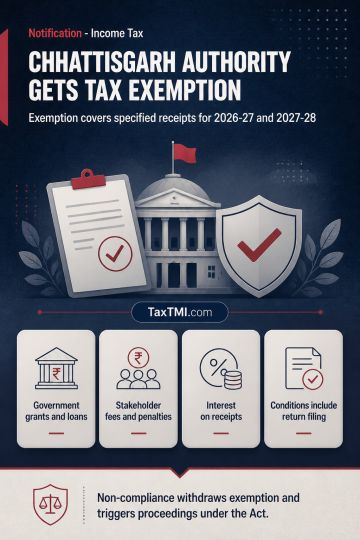
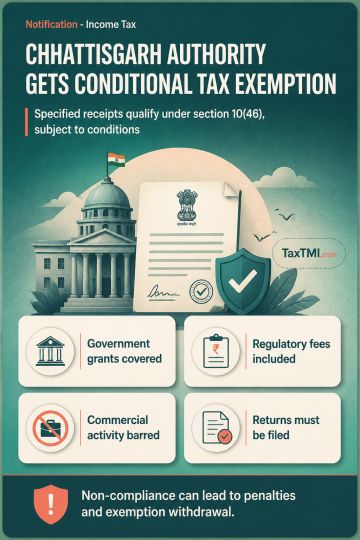
Specified regulatory authority income receives conditional tax exemption, subject to non-commercial activity, unchanged income character, and return f...
Tax exemption for regulatory authority income applies retrospectively, subject to non-commercial activity, unchanged income sources, and return-filing...
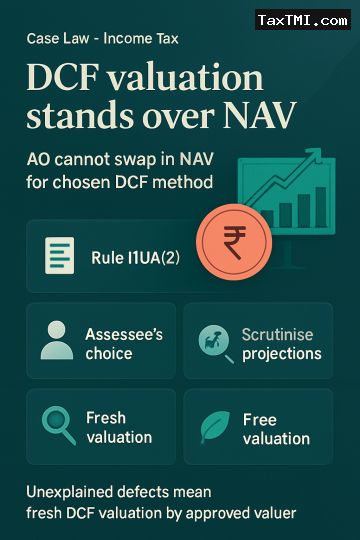
For unquoted equity shares, Rule 11UA(2) gives the assessee the choice of either the NAV method or the DCF method for fair market value, and the Assessing Officer cannot substitute NAV for the method chosen by the assessee. The AO may, however, scrutinise whether the DCF valuation is supported by reliable projections and material; where serious defects remain unexplained, the valuation as filed cannot be accepted. In that situation, the proper course is a fresh valuation by an approved valuer on the DCF basis, with the matter decided afresh in accordance with law. The same approach applies where later-year facts are identical.
For unquoted equity shares, Rule 11UA(2) gives the assessee the choice of either the NAV method or the DCF method for fair market value, and the Assessing Officer cannot substitute NAV for the method chosen by the assessee. The AO may, however, scrutinise whether the DCF valuation is supported by reliable projections and material; where serious defects remain unexplained, the valuation as filed cannot be accepted. In that situation, the proper course is a fresh valuation by an approved valuer on the DCF basis, with the matter decided afresh in accordance with law. The same approach applies where later-year facts are identical.
Note: It is a system-generated summary and is for quick reference only.
 TaxTMI
 of 4794
















 Join Channel


 TaxTMI