Content ownership determines GST treatment of printed publications: customer-supplied text is a taxable printing service, owned content is exempt good...
Employee recoveries, input tax credit and notice pay recovery under GST: AAR distinguishes taxable supplies from non-taxable perquisites and penalties...
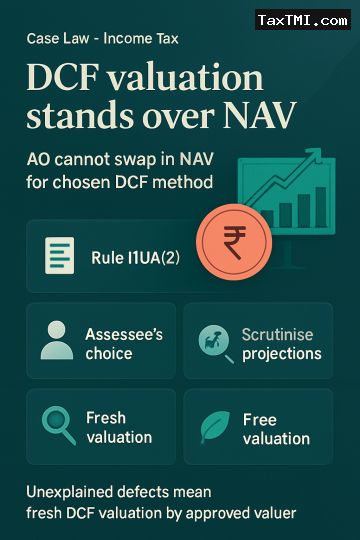
For unquoted equity shares, Rule 11UA(2) gives the assessee the choice of either the NAV method or the DCF method for fair market value, and the Assessing Officer cannot substitute NAV for the method chosen by the assessee. The AO may, however, scrutinise whether the DCF valuation is supported by reliable projections and material; where serious defects remain unexplained, the valuation as filed cannot be accepted. In that situation, the proper course is a fresh valuation by an approved valuer on the DCF basis, with the matter decided afresh in accordance with law. The same approach applies where later-year facts are identical.
For unquoted equity shares, Rule 11UA(2) gives the assessee the choice of either the NAV method or the DCF method for fair market value, and the Assessing Officer cannot substitute NAV for the method chosen by the assessee. The AO may, however, scrutinise whether the DCF valuation is supported by reliable projections and material; where serious defects remain unexplained, the valuation as filed cannot be accepted. In that situation, the proper course is a fresh valuation by an approved valuer on the DCF basis, with the matter decided afresh in accordance with law. The same approach applies where later-year facts are identical.
Note: It is a system-generated summary and is for quick reference only.
 TaxTMI
  TaxTMI
 of 4817


 Join Channel