Prolonged sterilisation of development rights supports capital-gains treatment, while business-income disallowances cannot govern capital-gains comput...
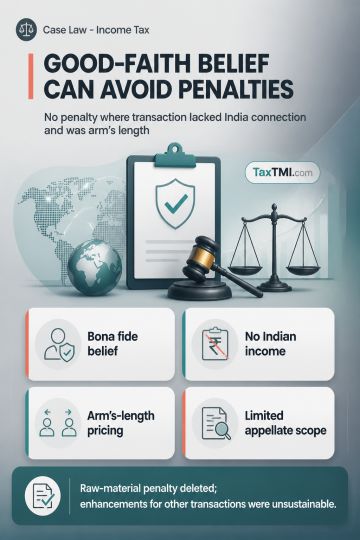
Additional evidence in transfer pricing dispute leads to fresh examination, while tax deductions, TDS credit, fee and refund interest require verifica...
Category II AIF pass-through taxation preserves non-business income character; investment receipts cannot be reclassified without applying recognised ...
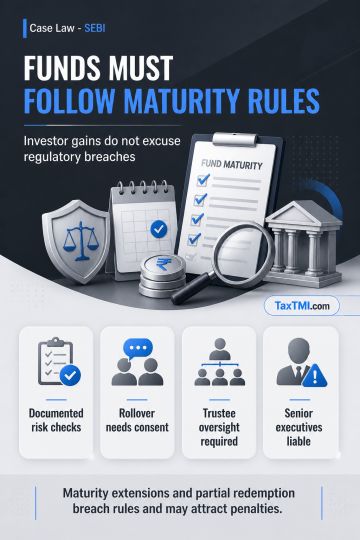
Mutual fund maturity rules require proper rollover, redemption, disclosure, and due diligence; investor gains cannot excuse regulatory breaches or pen...
Threshold exemption excludes exempt services, while stamp-paper purchases avoid reverse charge; consequential service tax penalties were also set asid...
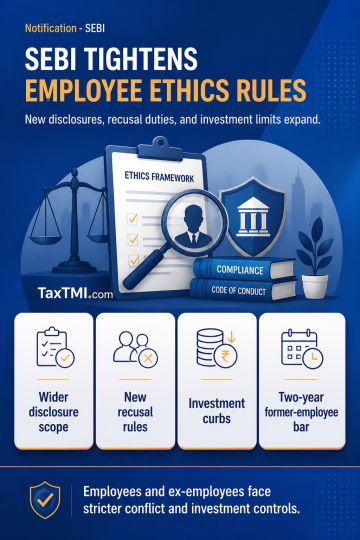
Employee conflict disclosures and investment restrictions expand with new recusal duties, post-employment limits, and compliance reporting requirement...
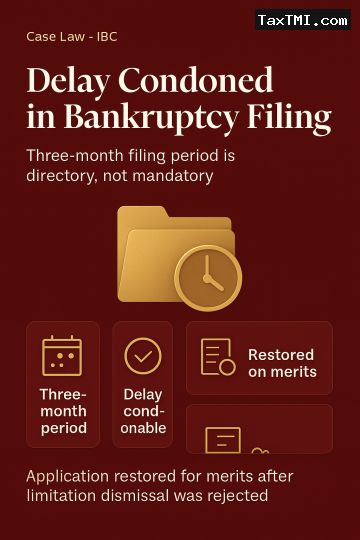
The text states that the three-month period for filing a bankruptcy application against a personal guarantor is directory, not mandatory, because Section 121(2) uses mandatory language without prescribing any consequence for delay. It further states that delay may be condoned on sufficient cause under the Limitation Act read with Section 238A of the Code, and that a dismissal solely on limitation without reasons is unsustainable. The application was therefore restored for consideration on merits.
The text states that the three-month period for filing a bankruptcy application against a personal guarantor is directory, not mandatory, because Section 121(2) uses mandatory language without prescribing any consequence for delay. It further states that delay may be condoned on sufficient cause under the Limitation Act read with Section 238A of the Code, and that a dismissal solely on limitation without reasons is unsustainable. The application was therefore restored for consideration on merits.
Note: It is a system-generated summary and is for quick reference only.
 TaxTMI
 of 4788



















 Join Channel


 TaxTMI
