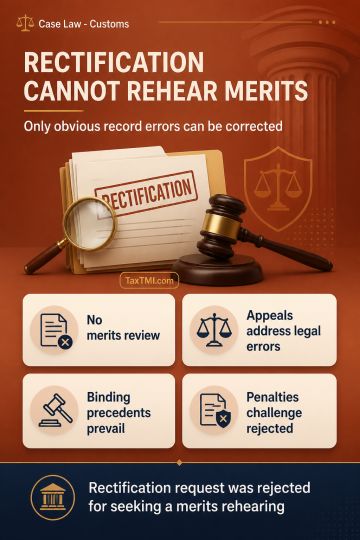
Rectification of mistake remains limited to self-evident record errors, preventing merits review through miscellaneous applications and preserving fin...
Tender creditworthiness conditions may extend to de facto Promoter Directors, with post-participation challenges generally barred absent arbitrariness...
Corporate representation in PMLA summons proceedings permitted through an authorised signatory, subject to directors' continuing cooperation and atten...
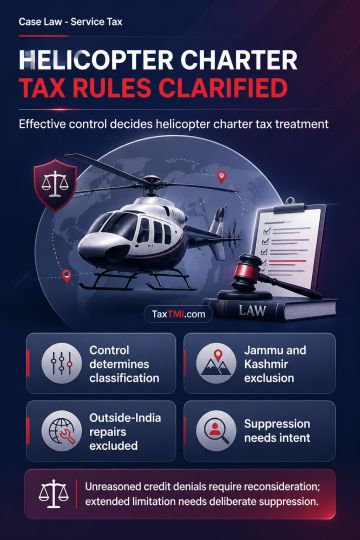
Helicopter charter classification requires effective control analysis, while territorial performance, reasoned credit orders and wilful suppression de...
Specified fund definition expands PAN exemption eligibility for registered alternative investment funds and qualifying International Financial Service...
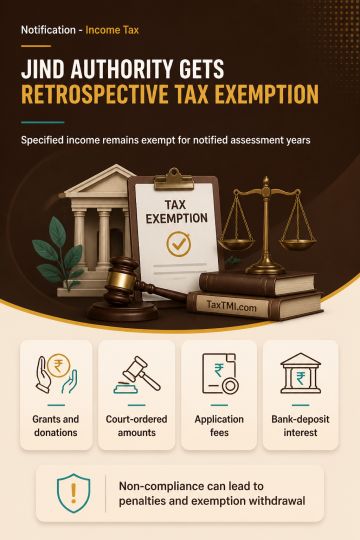
Tax exemption for specified legal-services authority income applies retrospectively, subject to non-commercial activity, unchanged income sources, and...
Page of 4792
Press 'Enter' after typing page number.
701 to 720 of 95833 Results
❮
❯
❯❯
0 / 200
Expand Note
Add to Folder
No Folders have been created
+
Are you sure you want to delete "My most important" ?
Finality of an eviction decree between landlord and tenant barred the corporate debtor from disputing the appellant's ownership in CIRP, because the lease had expired and the eviction decree had attained finality up to the Supreme Court. A status quo order in separate land-vesting proceedings, passed only between the appellant and the State, did not revive any possession right for a non-party occupier. Only ownership or a subsisting enforceable right can bring property within insolvency control; unlawful occupation after lease expiry is not an asset of the corporate debtor. The property was excluded from CIRP, consequential actions were treated as non-est, and the appellant was left to pursue possession and mesne profits.
Finality of an eviction decree between landlord and tenant barred the corporate debtor from disputing the appellant's ownership in CIRP, because the lease had expired and the eviction decree had attained finality up to the Supreme Court. A status quo order in separate land-vesting proceedings, passed only between the appellant and the State, did not revive any possession right for a non-party occupier. Only ownership or a subsisting enforceable right can bring property within insolvency control; unlawful occupation after lease expiry is not an asset of the corporate debtor. The property was excluded from CIRP, consequential actions were treated as non-est, and the appellant was left to pursue possession and mesne profits.
Note: It is a system-generated summary and is for quick reference only.
 TaxTMI
 of 4792
















 Join Channel



 TaxTMI