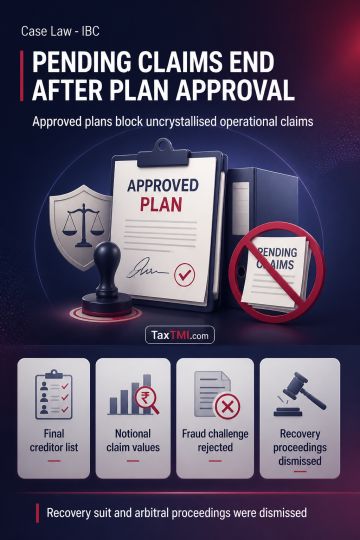
Clean slate principle extinguishes uncrystallised operational claims and bars continuation of pending recovery and arbitral proceedings after plan app...
Works contract classification governs composite layout-development contracts where VAT-paid goods are transferred alongside construction and infrastru...
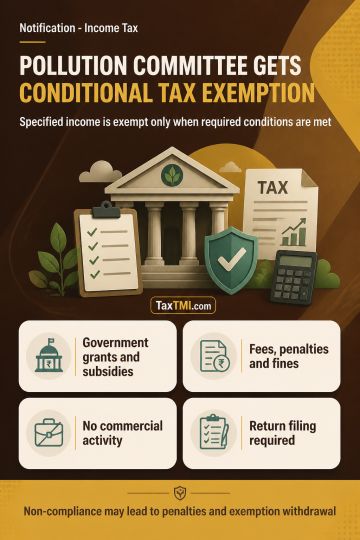
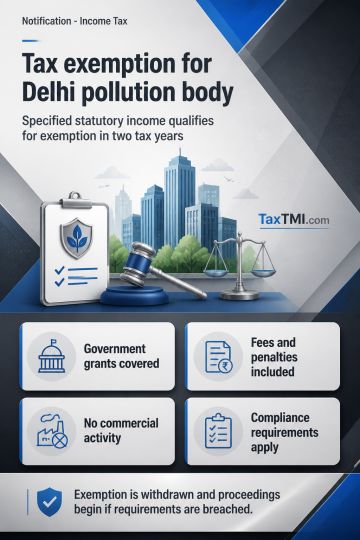
Specified income tax exemption for pollution control body remains conditional on non-commercial activity, unchanged income character, and return filin...
Jurisdictional facts in certificate-of-origin discrepancies can support customs show-cause proceedings, leaving factual explanations for departmental ...
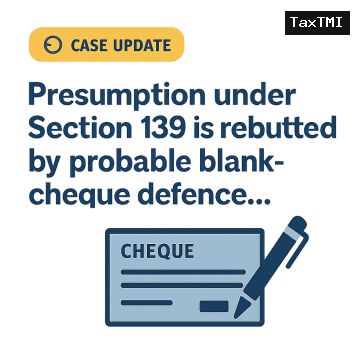
Absence of a money-lending licence does not by itself defeat a cheque-dishonour prosecution, but the complainant must still prove the foundational loan transaction once consideration is put in issue. On the facts discussed, the complainant could not give the particulars of the alleged loan, the date of disbursement, or the agreed interest, and produced no contemporaneous record of funds movement. The defence that signed blank cheques were issued in an existing professional and business relationship was treated as probable and sufficient to rebut the Section 139 presumption on a preponderance of probabilities. The trial court's view that no legally enforceable debt was proved was held to be a plausible one, so appellate interference with the acquittal was not warranted.
Absence of a money-lending licence does not by itself defeat a cheque-dishonour prosecution, but the complainant must still prove the foundational loan transaction once consideration is put in issue. On the facts discussed, the complainant could not give the particulars of the alleged loan, the date of disbursement, or the agreed interest, and produced no contemporaneous record of funds movement. The defence that signed blank cheques were issued in an existing professional and business relationship was treated as probable and sufficient to rebut the Section 139 presumption on a preponderance of probabilities. The trial court's view that no legally enforceable debt was proved was held to be a plausible one, so appellate interference with the acquittal was not warranted.
Note: It is a system-generated summary and is for quick reference only.
 TaxTMI
 of 4792












 Join Channel


 TaxTMI