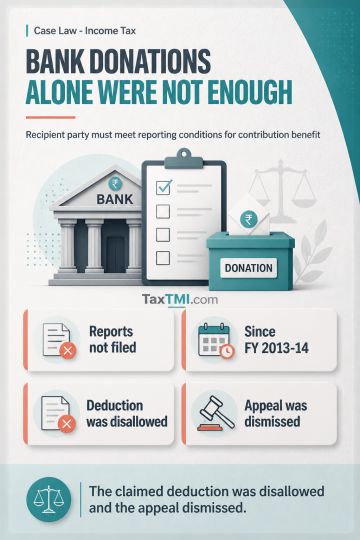
Political contribution deductions require recipient party compliance with contribution-reporting conditions; banking-channel donations alone do not qu...
Aggregation under TNMM prevents selective testing of intra-group services without comparable uncontrolled transactions, while appellate additional cla...
Protective assessment cannot duplicate identical receipts under competing characterisations; remote services did not establish a taxable permanent est...
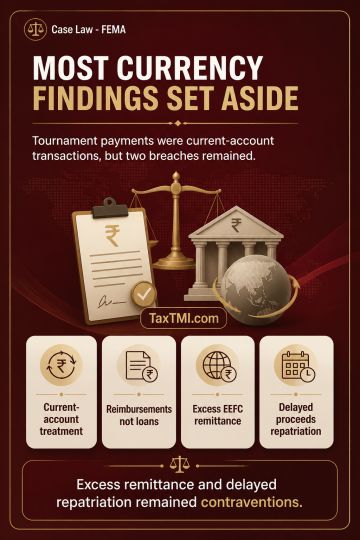
Current account treatment of overseas tournament services removed most FEMA findings, but excess EEFC remittance and delayed repatriation remained bre...
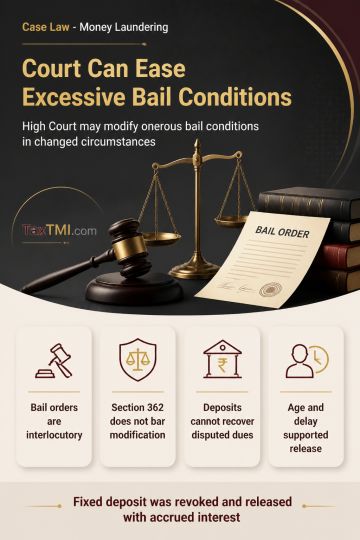
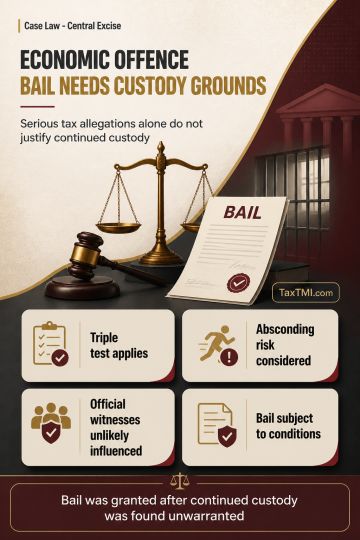
Modification of bail conditions remains available through inherent jurisdiction where onerous deposits undermine justice and cannot recover disputed d...
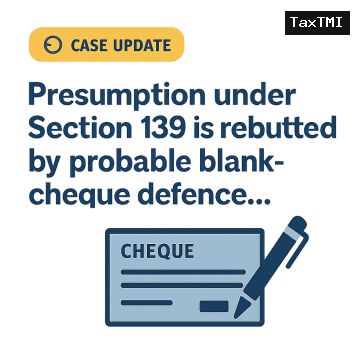
Absence of a money-lending licence does not by itself defeat a cheque-dishonour prosecution, but the complainant must still prove the foundational loan transaction once consideration is put in issue. On the facts discussed, the complainant could not give the particulars of the alleged loan, the date of disbursement, or the agreed interest, and produced no contemporaneous record of funds movement. The defence that signed blank cheques were issued in an existing professional and business relationship was treated as probable and sufficient to rebut the Section 139 presumption on a preponderance of probabilities. The trial court's view that no legally enforceable debt was proved was held to be a plausible one, so appellate interference with the acquittal was not warranted.
Absence of a money-lending licence does not by itself defeat a cheque-dishonour prosecution, but the complainant must still prove the foundational loan transaction once consideration is put in issue. On the facts discussed, the complainant could not give the particulars of the alleged loan, the date of disbursement, or the agreed interest, and produced no contemporaneous record of funds movement. The defence that signed blank cheques were issued in an existing professional and business relationship was treated as probable and sufficient to rebut the Section 139 presumption on a preponderance of probabilities. The trial court's view that no legally enforceable debt was proved was held to be a plausible one, so appellate interference with the acquittal was not warranted.
Note: It is a system-generated summary and is for quick reference only.
 TaxTMI
 of 4796


















 Join Channel


 TaxTMI
