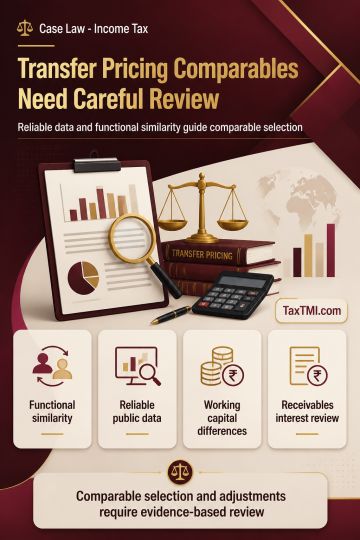
Transfer pricing comparability requires functional alignment, reliable financial data, and careful review of working capital and receivables adjustmen...
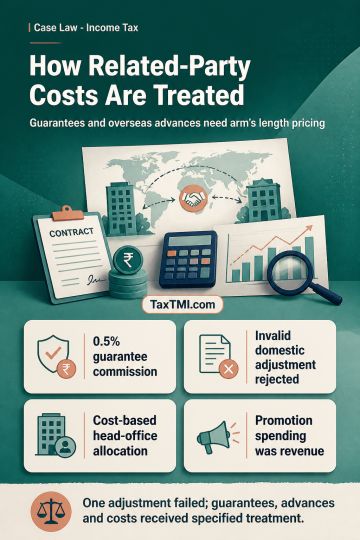
Transfer pricing rules require benchmarking corporate guarantees and associated-enterprise advances, while invalid domestic-transaction adjustments ca...
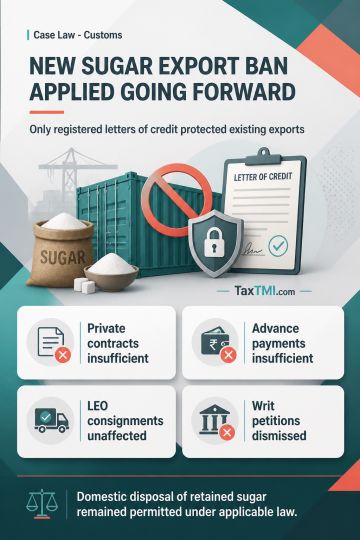
Prospective sugar export prohibition required registered letters of credit; private contracts and export quotas created no enforceable continuation ri...
Retroactive interim-moratorium exclusion permits protective asset disclosure and preservation measures against personal guarantors pending arbitration...
Page of 4798
Press 'Enter' after typing page number.
461 to 480 of 95957 Results
❮
❯
❯❯
0 / 200
Expand Note
Add to Folder
No Folders have been created
+
Are you sure you want to delete "My most important" ?
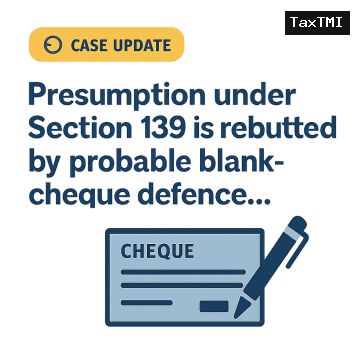
Absence of a money-lending licence does not by itself defeat a cheque-dishonour prosecution, but the complainant must still prove the foundational loan transaction once consideration is put in issue. On the facts discussed, the complainant could not give the particulars of the alleged loan, the date of disbursement, or the agreed interest, and produced no contemporaneous record of funds movement. The defence that signed blank cheques were issued in an existing professional and business relationship was treated as probable and sufficient to rebut the Section 139 presumption on a preponderance of probabilities. The trial court's view that no legally enforceable debt was proved was held to be a plausible one, so appellate interference with the acquittal was not warranted.
Absence of a money-lending licence does not by itself defeat a cheque-dishonour prosecution, but the complainant must still prove the foundational loan transaction once consideration is put in issue. On the facts discussed, the complainant could not give the particulars of the alleged loan, the date of disbursement, or the agreed interest, and produced no contemporaneous record of funds movement. The defence that signed blank cheques were issued in an existing professional and business relationship was treated as probable and sufficient to rebut the Section 139 presumption on a preponderance of probabilities. The trial court's view that no legally enforceable debt was proved was held to be a plausible one, so appellate interference with the acquittal was not warranted.
Note: It is a system-generated summary and is for quick reference only.
 TaxTMI
 of 4798











 Join Channel


 TaxTMI