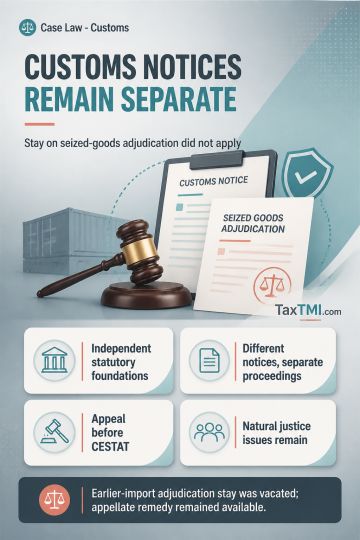
Independent show-cause notices remain separate proceedings, while customs adjudication challenges should ordinarily follow the statutory appellate rem...
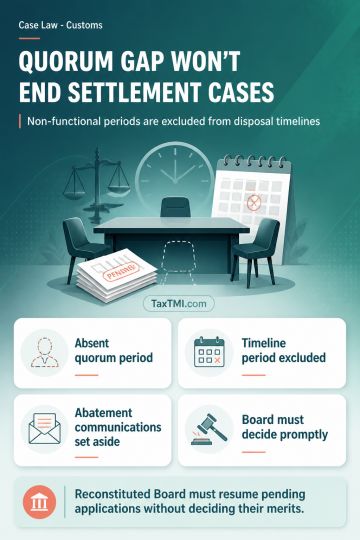
Institutional incapacity in customs settlement proceedings excludes non-functional quorum periods from statutory disposal timelines, preventing automa...
Interactive touchscreen panels with integrated computing functions fall under automatic data-processing machines rather than display monitors for cust...
Ex parte injunction service requirements were substantially met, while civil recovery and SFIO investigation into provident fund defalcation continued...
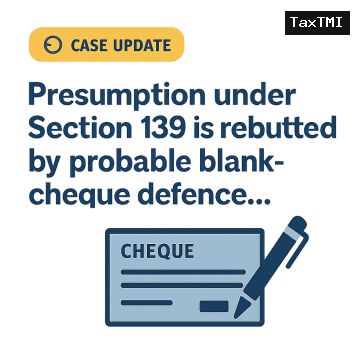
Absence of a money-lending licence does not by itself defeat a cheque-dishonour prosecution, but the complainant must still prove the foundational loan transaction once consideration is put in issue. On the facts discussed, the complainant could not give the particulars of the alleged loan, the date of disbursement, or the agreed interest, and produced no contemporaneous record of funds movement. The defence that signed blank cheques were issued in an existing professional and business relationship was treated as probable and sufficient to rebut the Section 139 presumption on a preponderance of probabilities. The trial court's view that no legally enforceable debt was proved was held to be a plausible one, so appellate interference with the acquittal was not warranted.
Absence of a money-lending licence does not by itself defeat a cheque-dishonour prosecution, but the complainant must still prove the foundational loan transaction once consideration is put in issue. On the facts discussed, the complainant could not give the particulars of the alleged loan, the date of disbursement, or the agreed interest, and produced no contemporaneous record of funds movement. The defence that signed blank cheques were issued in an existing professional and business relationship was treated as probable and sufficient to rebut the Section 139 presumption on a preponderance of probabilities. The trial court's view that no legally enforceable debt was proved was held to be a plausible one, so appellate interference with the acquittal was not warranted.
Note: It is a system-generated summary and is for quick reference only.
 TaxTMI
 of 4800














 Join Channel


 TaxTMI