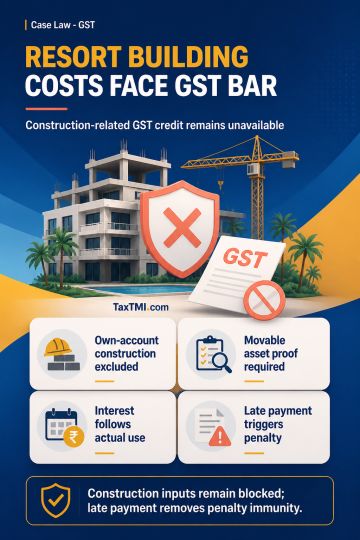
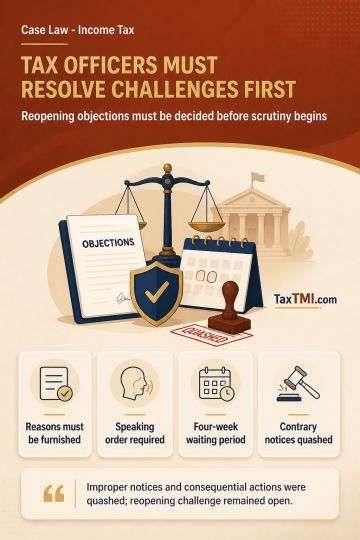
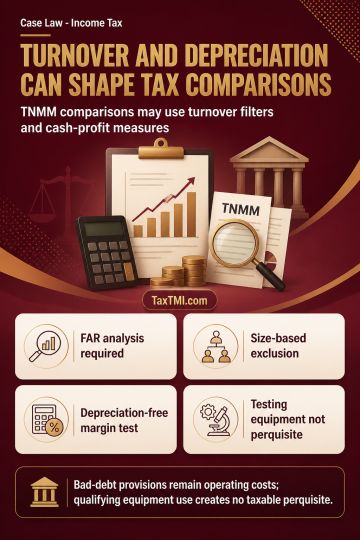
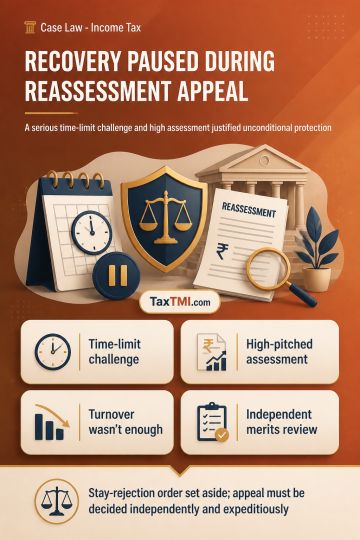
Blocked input tax credit for resort construction remains unavailable; interest follows actual utilisation, while delayed payment attracts statutory pe...
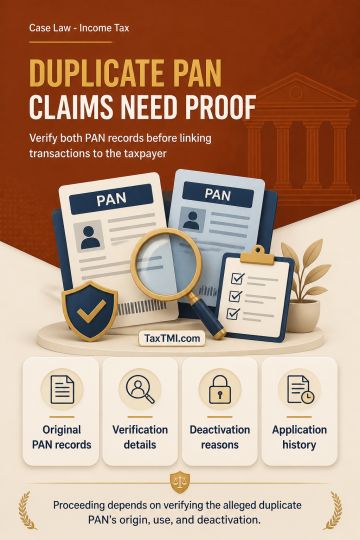
Duplicate PAN allocation requires record verification and deactivation reasons before assessment-related transactions can be attributed to an assessee...
Faceless assessment safeguards require requested personal hearings and adequate final show-cause response time, failing which reassessment is required...
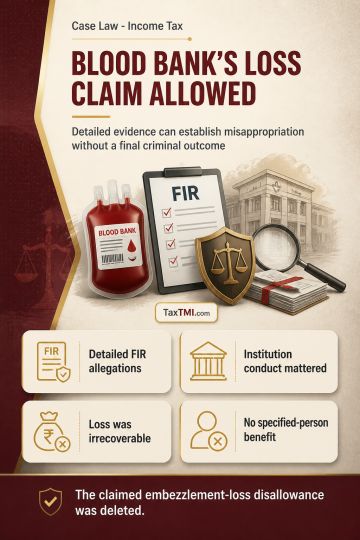
Embezzlement losses in charitable institutions remain allowable when misappropriation is established, irrecoverable, and not a specified-person benefi...
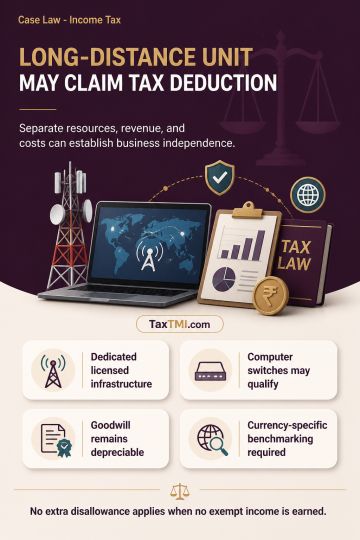
National long-distance undertaking status supports deduction where separately licensed infrastructure, resources, revenue, and expenditure establish c...
Page of 4886
Press 'Enter' after typing page number.
101 to 120 of 97710 Results
❮
❯
❯❯
0 / 200
Expand Note
Add to Folder
No Folders have been created
+
Are you sure you want to delete "My most important" ?
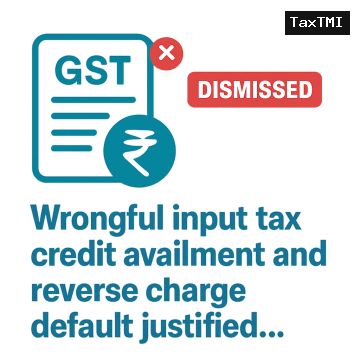
Wrongful availment of input tax credit, where credit exceeded GSTR-2A and was utilised in GSTR-3B, was treated as prima facie suppression of facts with intent to evade tax, supporting invocation of the extended limitation under GST. The Court also noted an apparent failure to discharge reverse charge liability on commissions from foreign booking agencies. The limitation challenge was rejected as covered by the earlier Madras High Court ruling in Tata Play Limited, and the Court further observed that, for the relevant assessment years, even the period for passing orders under the lesser limitation regime had not expired. The writ petitions were dismissed, with liberty to pursue the statutory appeal on merits.
Wrongful availment of input tax credit, where credit exceeded GSTR-2A and was utilised in GSTR-3B, was treated as prima facie suppression of facts with intent to evade tax, supporting invocation of the extended limitation under GST. The Court also noted an apparent failure to discharge reverse charge liability on commissions from foreign booking agencies. The limitation challenge was rejected as covered by the earlier Madras High Court ruling in Tata Play Limited, and the Court further observed that, for the relevant assessment years, even the period for passing orders under the lesser limitation regime had not expired. The writ petitions were dismissed, with liberty to pursue the statutory appeal on merits.
Note: It is a system-generated summary and is for quick reference only.
 TaxTMI
  TaxTMI
 of 4886