Rectification of mistake remains limited to self-evident record errors, preventing merits review through miscellaneous applications and preserving fin...
Tender creditworthiness conditions may extend to de facto Promoter Directors, with post-participation challenges generally barred absent arbitrariness...
Corporate representation in PMLA summons proceedings permitted through an authorised signatory, subject to directors' continuing cooperation and atten...
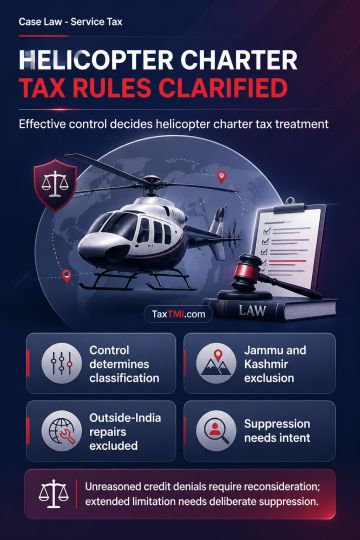
Helicopter charter classification requires effective control analysis, while territorial performance, reasoned credit orders and wilful suppression de...
Specified fund definition expands PAN exemption eligibility for registered alternative investment funds and qualifying International Financial Service...
Page of 4794
Press 'Enter' after typing page number.
741 to 760 of 95875 Results
❮
❯
❯❯
0 / 200
Expand Note
Add to Folder
No Folders have been created
+
Are you sure you want to delete "My most important" ?
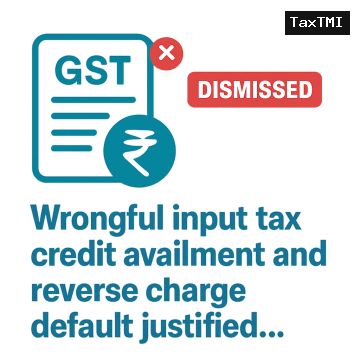
Wrongful availment of input tax credit, where credit exceeded GSTR-2A and was utilised in GSTR-3B, was treated as prima facie suppression of facts with intent to evade tax, supporting invocation of the extended limitation under GST. The Court also noted an apparent failure to discharge reverse charge liability on commissions from foreign booking agencies. The limitation challenge was rejected as covered by the earlier Madras High Court ruling in Tata Play Limited, and the Court further observed that, for the relevant assessment years, even the period for passing orders under the lesser limitation regime had not expired. The writ petitions were dismissed, with liberty to pursue the statutory appeal on merits.
Wrongful availment of input tax credit, where credit exceeded GSTR-2A and was utilised in GSTR-3B, was treated as prima facie suppression of facts with intent to evade tax, supporting invocation of the extended limitation under GST. The Court also noted an apparent failure to discharge reverse charge liability on commissions from foreign booking agencies. The limitation challenge was rejected as covered by the earlier Madras High Court ruling in Tata Play Limited, and the Court further observed that, for the relevant assessment years, even the period for passing orders under the lesser limitation regime had not expired. The writ petitions were dismissed, with liberty to pursue the statutory appeal on merits.
Note: It is a system-generated summary and is for quick reference only.
 TaxTMI
 of 4794















 Join Channel


 TaxTMI