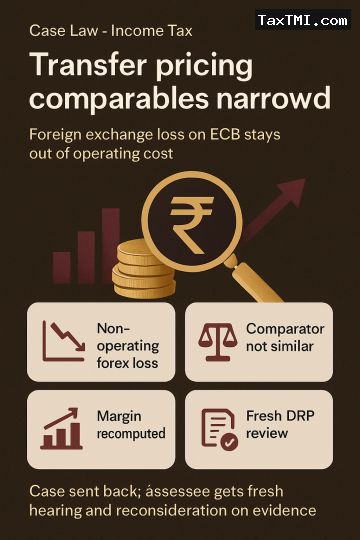
Transfer pricing comparability under TNMM: foreign exchange loss on ECB excluded from operating cost, and a functionally dissimilar comparator removed...
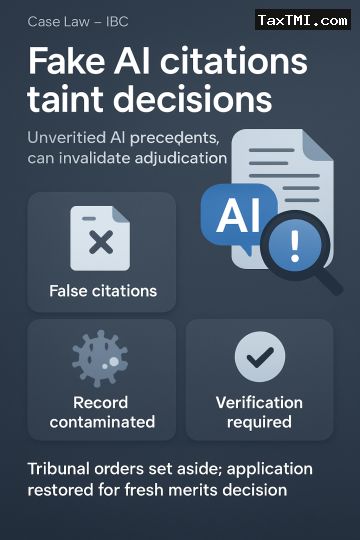
Fake AI-generated precedents vitiate adjudication, with unverified citations contaminating the decision-making process and undermining the rule of law...
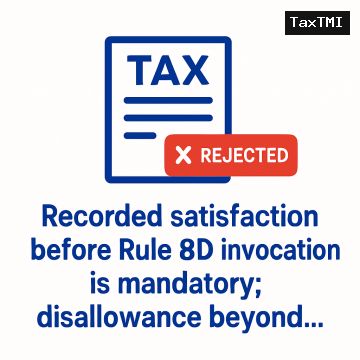
Rule 8D can be applied for exempt-income disallowance only after the Assessing Officer examines the assessee's accounts and records why the claim of lesser or no expenditure is incorrect under section 14A(2). The text says the officer rejected the claim merely for want of evidence, without identifying the missing material, analysing the cash-flow and fund-flow in the audited accounts, or linking borrowed funds, interest expenditure, or specific administrative to the exempt investments. The appellate authority also did not address this statutory defect. The further disallowance under Rule 8D was therefore treated as unsustainable and was confined to the assessee's voluntary disallowance.
Rule 8D can be applied for exempt-income disallowance only after the Assessing Officer examines the assessee's accounts and records why the claim of lesser or no expenditure is incorrect under section 14A(2). The text says the officer rejected the claim merely for want of evidence, without identifying the missing material, analysing the cash-flow and fund-flow in the audited accounts, or linking borrowed funds, interest expenditure, or specific administrative to the exempt investments. The appellate authority also did not address this statutory defect. The further disallowance under Rule 8D was therefore treated as unsustainable and was confined to the assessee's voluntary disallowance.
Note: It is a system-generated summary and is for quick reference only.
 TaxTMI
 of 4786




 Join Channel


 TaxTMI
