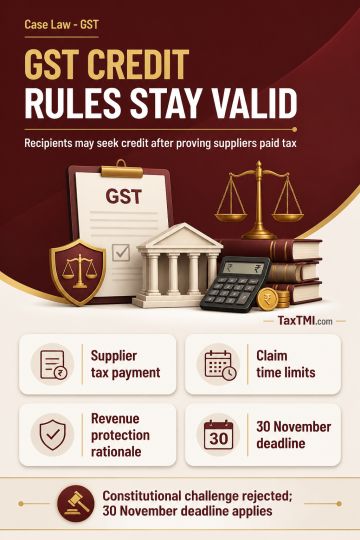
Input tax credit conditions remain constitutionally valid, with eligible recipient claims considered under GST circulars and retrospective filing dead...
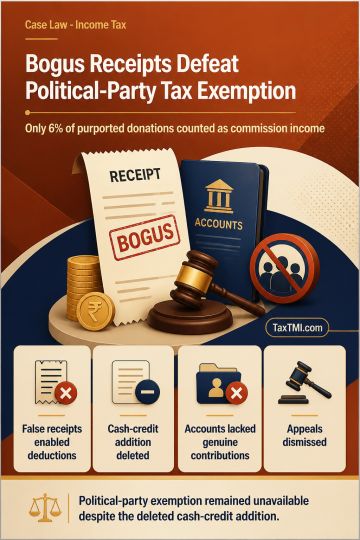
Bogus donation receipts justified commission income assessment and defeated political-party tax exemption for inaccurate accounts and reporting failur...
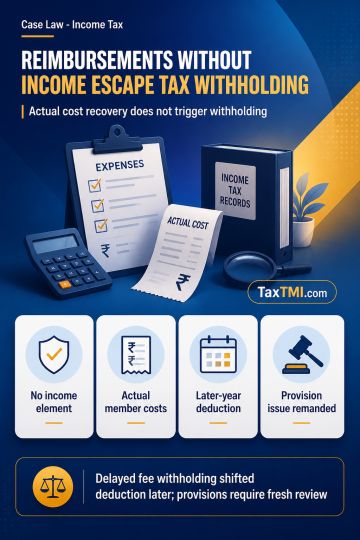
Pure reimbursement without income element escapes tax withholding, while delayed withholding and unsupported provisions face deferred or renewed scrut...
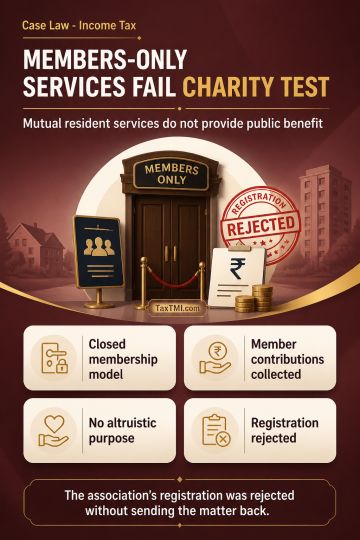
Public benefit requirement defeats charitable registration where residents' association services are reciprocal, member-only facilities governed by mu...
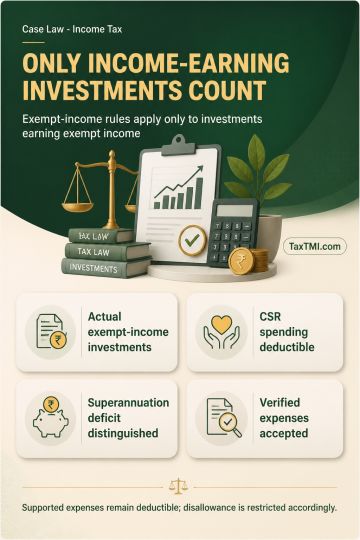
Exempt-income expenditure disallowance is confined to investments that actually generated exempt income, while supported business expenses remain dedu...
Page of 4796
Press 'Enter' after typing page number.
621 to 640 of 95918 Results
❮
❯
❯❯
0 / 200
Expand Note
Add to Folder
No Folders have been created
+
Are you sure you want to delete "My most important" ?
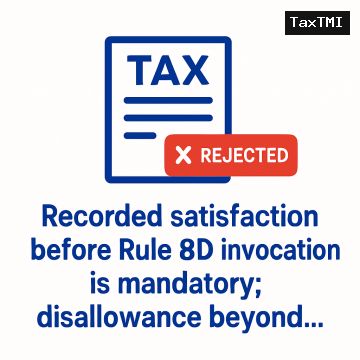
Rule 8D can be applied for exempt-income disallowance only after the Assessing Officer examines the assessee's accounts and records why the claim of lesser or no expenditure is incorrect under section 14A(2). The text says the officer rejected the claim merely for want of evidence, without identifying the missing material, analysing the cash-flow and fund-flow in the audited accounts, or linking borrowed funds, interest expenditure, or specific administrative to the exempt investments. The appellate authority also did not address this statutory defect. The further disallowance under Rule 8D was therefore treated as unsustainable and was confined to the assessee's voluntary disallowance.
Rule 8D can be applied for exempt-income disallowance only after the Assessing Officer examines the assessee's accounts and records why the claim of lesser or no expenditure is incorrect under section 14A(2). The text says the officer rejected the claim merely for want of evidence, without identifying the missing material, analysing the cash-flow and fund-flow in the audited accounts, or linking borrowed funds, interest expenditure, or specific administrative to the exempt investments. The appellate authority also did not address this statutory defect. The further disallowance under Rule 8D was therefore treated as unsustainable and was confined to the assessee's voluntary disallowance.
Note: It is a system-generated summary and is for quick reference only.
 TaxTMI
 of 4796






 Join Channel


 TaxTMI