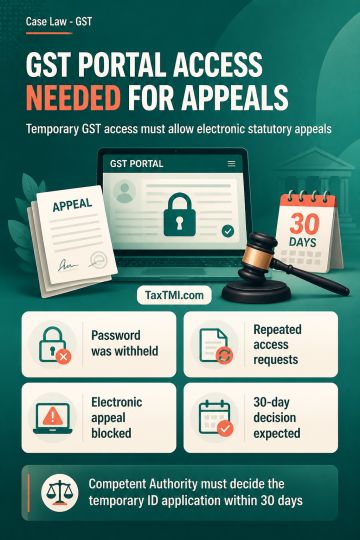
Necessary-party requirements limit impleadment of independent entities, while deferred consideration does not create an appealable adverse determinati...
Food supplement classification requires common parlance and authoritative tests, preventing treatment as proprietary Ayurvedic medicines without suppo...
Specified regulatory authority income receives conditional tax exemption, subject to non-commercial activity, unchanged income character, and return f...
Tax exemption for regulatory authority income applies retrospectively, subject to non-commercial activity, unchanged income sources, and return-filing...
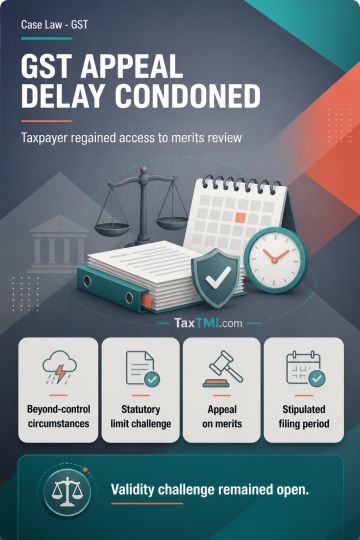
Availability of an alternative statutory remedy did not bar writ entertainability where the challenge was confined to the legality of rejection of the statutory appeal on limitation and to computation of limitation under the CGST Act. The High Court reiterated that the doctrine of merger does not apply when a filing is rejected as time-barred without consideration on merits. It further held that time spent in bona fide rectification proceedings could be excluded on Section 14 principles, as the proceeding was pursued with due diligence and good faith, and that an appellant must be given a reasonable opportunity to explain delay before dismissal as time-barred.
Availability of an alternative statutory remedy did not bar writ entertainability where the challenge was confined to the legality of rejection of the statutory appeal on limitation and to computation of limitation under the CGST Act. The High Court reiterated that the doctrine of merger does not apply when a filing is rejected as time-barred without consideration on merits. It further held that time spent in bona fide rectification proceedings could be excluded on Section 14 principles, as the proceeding was pursued with due diligence and good faith, and that an appellant must be given a reasonable opportunity to explain delay before dismissal as time-barred.
Note: It is a system-generated summary and is for quick reference only.
 TaxTMI
 of 4798















 Join Channel


 TaxTMI