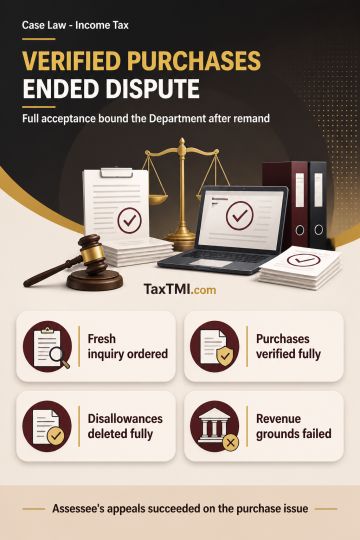
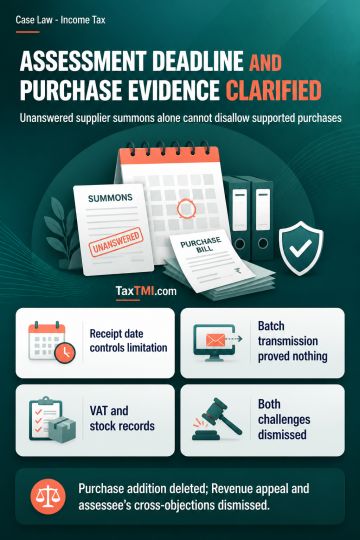
Limitation for consequential assessments runs from prescribed authority receipt, while verified purchases cannot be disallowed merely for unanswered s...
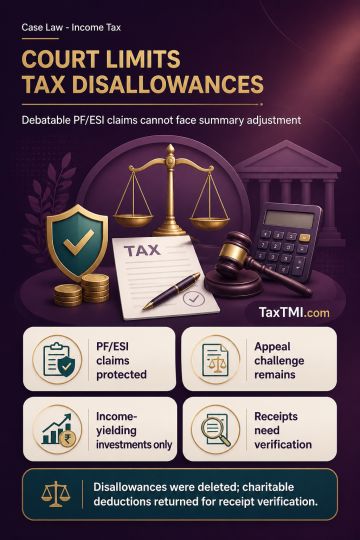
Higher depreciation for qualifying commercial vehicles, exempt-income disallowance, research deduction verification, and club-expense treatment clarif...
Charitable registration renewal cannot become an assessment of receipts, profitability or annual exemption compliance, requiring renewal and donation ...
AMP expenditure for own business is not an international transaction without an associated-enterprise arrangement, eliminating transfer pricing adjust...
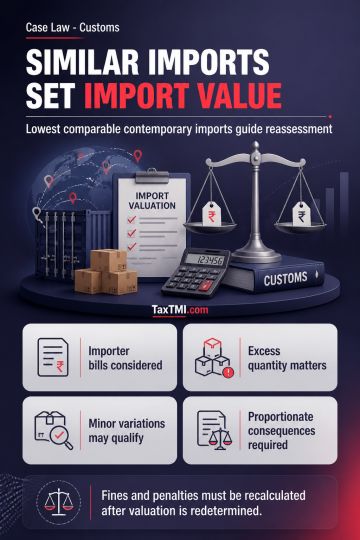
Customs valuation must use comparable contemporary imports, while confiscation fines and penalties require proportionate recalculation on reassessed v...
Page of 4805
Press 'Enter' after typing page number.
61 to 80 of 96092 Results
❮
❯
❯❯
0 / 200
Expand Note
Add to Folder
No Folders have been created
+
Are you sure you want to delete "My most important" ?
Article 226(2) is discussed as extending writ jurisdiction where the cause of action spans more than one State, so judicial remedies are not defeated by territorial limits. The text explains that insolvency proceedings in Bombay and the later alienation of secured assets in Bengaluru were treated as part of the same chain of cause of action, supporting consequential directions over the properties. It also states that Sub-Registrars are statutory functionaries whose duty to implement binding judicial directions is ministerial, not discretionary, and they cannot review or disregard such orders. The article notes that mandamus was issued to compel compliance, update registration records, and deal with the concerned representations.
Article 226(2) is discussed as extending writ jurisdiction where the cause of action spans more than one State, so judicial remedies are not defeated by territorial limits. The text explains that insolvency proceedings in Bombay and the later alienation of secured assets in Bengaluru were treated as part of the same chain of cause of action, supporting consequential directions over the properties. It also states that Sub-Registrars are statutory functionaries whose duty to implement binding judicial directions is ministerial, not discretionary, and they cannot review or disregard such orders. The article notes that mandamus was issued to compel compliance, update registration records, and deal with the concerned representations.
Note: It is a system-generated summary and is for quick reference only.
 TaxTMI
 of 4805















 Join Channel



 TaxTMI