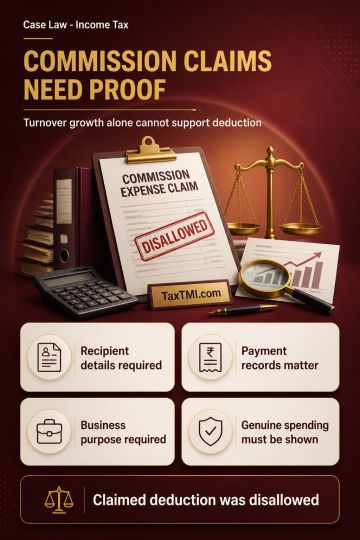
Business expenditure deduction requires proof of genuine commission payments and commercial allowability; turnover growth alone cannot validate the cl...
Article 8 treaty coverage excluded third-party airline support services, while documented demonetisation cash receipts remained accepted business inco...
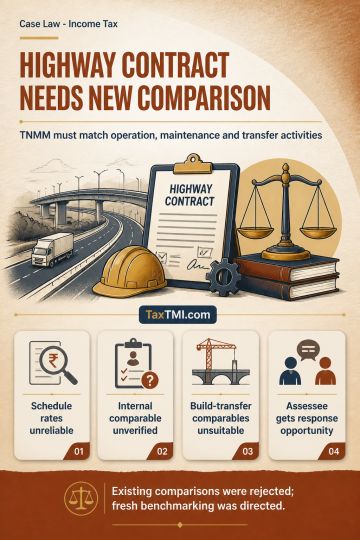
Functional comparability under TNMM requires highway contract benchmarks to reflect operation, maintenance and transfer activities, requiring fresh be...
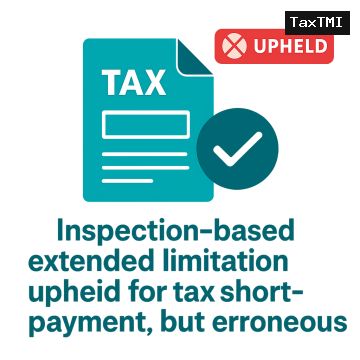
Inspection-based satisfaction was sufficient to invoke extended limitation for tax short-payment, because the notices arose from records showing discrepancies between Form 26AS and GSTR-7 and expressly referred to wilful suppression; the initiation under Section 74 was therefore upheld. At the same time, the Court found that the revenue abstract and order had erroneously treated exempted turnover as tax liability for one period and referred to the wrong period in another, so both writ petitions were remitted for fresh adjudication on merits after personal hearing and detailed replies with supporting documents.
Inspection-based satisfaction was sufficient to invoke extended limitation for tax short-payment, because the notices arose from records showing discrepancies between Form 26AS and GSTR-7 and expressly referred to wilful suppression; the initiation under Section 74 was therefore upheld. At the same time, the Court found that the revenue abstract and order had erroneously treated exempted turnover as tax liability for one period and referred to the wrong period in another, so both writ petitions were remitted for fresh adjudication on merits after personal hearing and detailed replies with supporting documents.
Note: It is a system-generated summary and is for quick reference only.
 TaxTMI
 of 4792




 Join Channel


 TaxTMI
