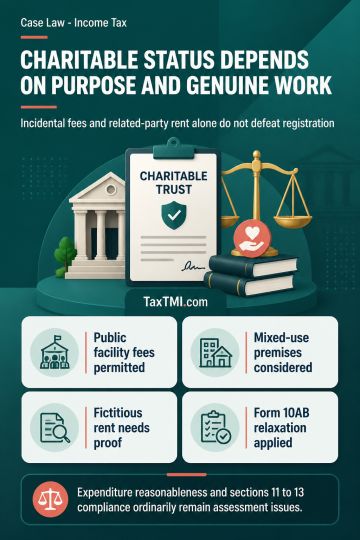
Charitable registration turns on predominant purpose and genuine activities, while incidental fees and related-party rent require supporting adverse m...
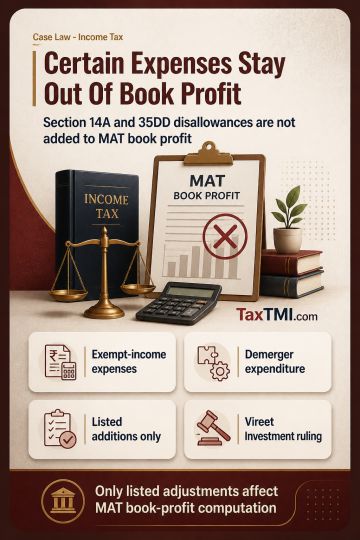
MAT book-profit adjustments exclude disallowances for exempt-income expenditure and demerger expenditure unless expressly listed under the statutory c...
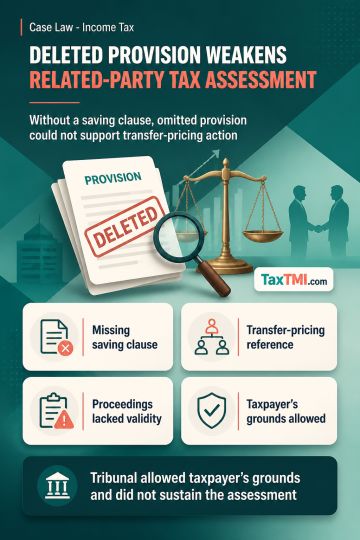
Omitted specified domestic transaction provision invalidates related-party expenditure transfer-pricing references and assessments based on consequent...
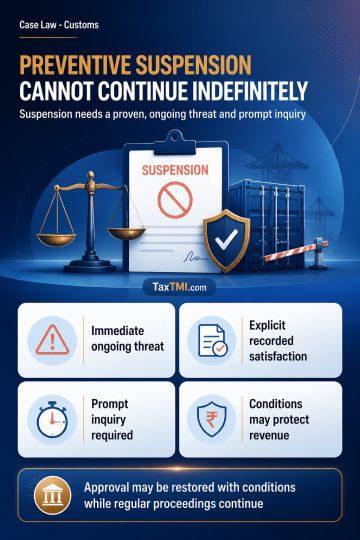
Preventive suspension requires an immediate continuing threat and cannot become indefinite without inquiry, fresh evidence, or proportionate safeguard...
Page of 4800
Press 'Enter' after typing page number.
261 to 280 of 96000 Results
❮
❯
❯❯
0 / 200
Expand Note
Add to Folder
No Folders have been created
+
Are you sure you want to delete "My most important" ?
Educational trust exemption was sustained despite allegations that development fee collections and surplus indicated capitation fee or profit motive, because the prior year's finding that the assessee was charitable and engaged in education had already been affirmed, and no fresh distinguishing material or proved violation of the capitation fee law was shown. Depreciation on trust assets remained allowable for A.Y. 2014-15, since section 11(6) operates prospectively from A.Y. 2015-16 and depreciation is part of real income computation; the disallowance failed. Capital gains exemption under section 11(1A) was also allowed on compulsory acquisition proceeds, as reinvestment in new capital assets is tested on substance and does not require strict fund-to-fund tracing, with proportionate relief available.
Educational trust exemption was sustained despite allegations that development fee collections and surplus indicated capitation fee or profit motive, because the prior year's finding that the assessee was charitable and engaged in education had already been affirmed, and no fresh distinguishing material or proved violation of the capitation fee law was shown. Depreciation on trust assets remained allowable for A.Y. 2014-15, since section 11(6) operates prospectively from A.Y. 2015-16 and depreciation is part of real income computation; the disallowance failed. Capital gains exemption under section 11(1A) was also allowed on compulsory acquisition proceeds, as reinvestment in new capital assets is tested on substance and does not require strict fund-to-fund tracing, with proportionate relief available.
Note: It is a system-generated summary and is for quick reference only.
 TaxTMI
 of 4800










 Join Channel



 TaxTMI