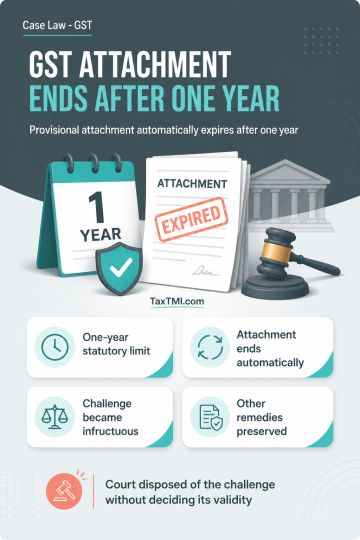
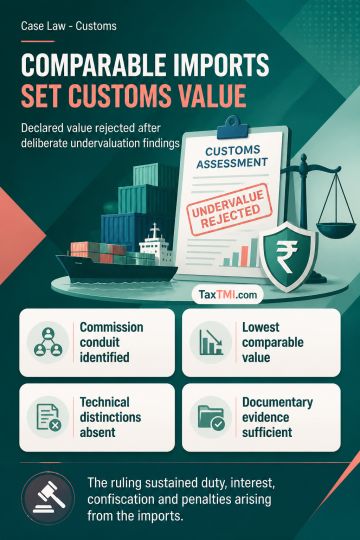
Transaction value rejection requires reliable corroboration; refundable VAT is excluded and temporary registration does not defeat new-vehicle exempti...
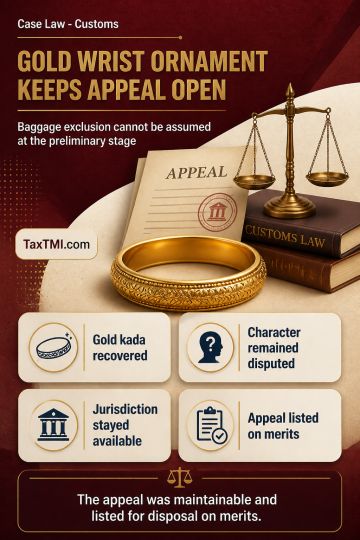
Appellate jurisdiction remains available where a wrist-worn gold ornament cannot conclusively be characterised as imported baggage at the preliminary ...
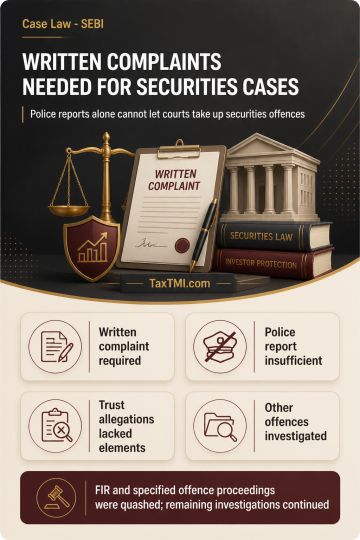
Written complaint requirement bars cognizance on police reports for securities offences, while unsupported breach of trust and cheating allegations fa...
Risk-based postal import clearance standardises electronic assessment, document requests, duty realisation and delivery controls at Foreign Post Offic...
Customs Cargo Service Provider appointment extends custodianship to additional terminal land, subject to cargo-control, security and licence condition...
Refusal to condone delay in filing the appeal against an intimation under Section 143(1) was upheld because the assessee had knowledge of the outstanding demand from the refund-adjustment communication and had even sought revision against that demand; the appellate authorities' concurrent factual findings that the appeal was time-barred and the delay remained unexplained showed no perversity or legal infirmity, so no substantial question of law arose under Section 260A. The assessee's claim for exemption of long-term capital gains on sale of shares was not examined on merits because the appellate remedy itself had failed on limitation. The rectification grievance was treated as an independent statutory remedy and left open.
Refusal to condone delay in filing the appeal against an intimation under Section 143(1) was upheld because the assessee had knowledge of the outstanding demand from the refund-adjustment communication and had even sought revision against that demand; the appellate authorities' concurrent factual findings that the appeal was time-barred and the delay remained unexplained showed no perversity or legal infirmity, so no substantial question of law arose under Section 260A. The assessee's claim for exemption of long-term capital gains on sale of shares was not examined on merits because the appellate remedy itself had failed on limitation. The rectification grievance was treated as an independent statutory remedy and left open.
Note: It is a system-generated summary and is for quick reference only.
 TaxTMI
 of 4788











 Join Channel


 TaxTMI