Necessary-party requirements limit impleadment of independent entities, while deferred consideration does not create an appealable adverse determinati...
Food supplement classification requires common parlance and authoritative tests, preventing treatment as proprietary Ayurvedic medicines without suppo...
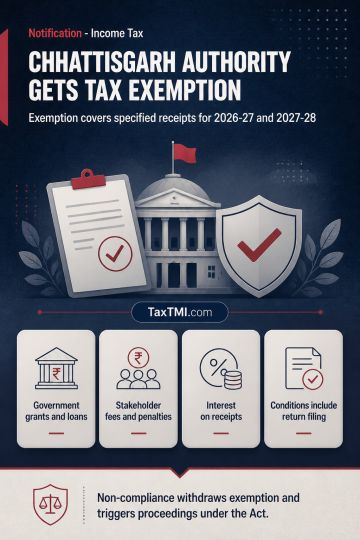
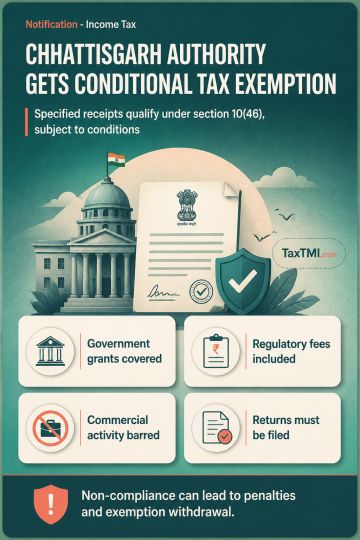
Specified regulatory authority income receives conditional tax exemption, subject to non-commercial activity, unchanged income character, and return f...
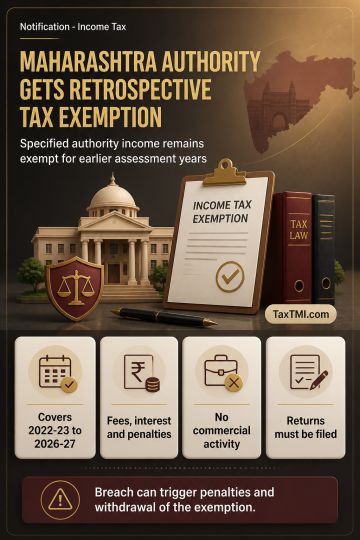
Tax exemption for regulatory authority income applies retrospectively, subject to non-commercial activity, unchanged income sources, and return-filing...
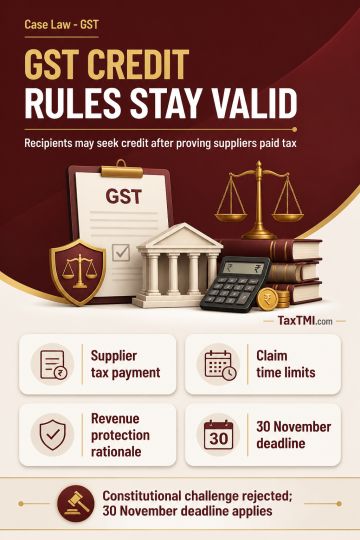
Input tax credit conditions remain constitutionally valid, with eligible recipient claims considered under GST circulars and retrospective filing dead...
Refusal to condone delay in filing the appeal against an intimation under Section 143(1) was upheld because the assessee had knowledge of the outstanding demand from the refund-adjustment communication and had even sought revision against that demand; the appellate authorities' concurrent factual findings that the appeal was time-barred and the delay remained unexplained showed no perversity or legal infirmity, so no substantial question of law arose under Section 260A. The assessee's claim for exemption of long-term capital gains on sale of shares was not examined on merits because the appellate remedy itself had failed on limitation. The rectification grievance was treated as an independent statutory remedy and left open.
Refusal to condone delay in filing the appeal against an intimation under Section 143(1) was upheld because the assessee had knowledge of the outstanding demand from the refund-adjustment communication and had even sought revision against that demand; the appellate authorities' concurrent factual findings that the appeal was time-barred and the delay remained unexplained showed no perversity or legal infirmity, so no substantial question of law arose under Section 260A. The assessee's claim for exemption of long-term capital gains on sale of shares was not examined on merits because the appellate remedy itself had failed on limitation. The rectification grievance was treated as an independent statutory remedy and left open.
Note: It is a system-generated summary and is for quick reference only.
 TaxTMI
 of 4792















 Join Channel


 TaxTMI