Transfer pricing and tax deductions upheld on established principles, while employee contributions and warranty provisions returned for fresh examinat...
Captive transfer pricing relies on industrial consumer tariffs, while genuine quotations can benchmark effluent treatment transfers under the Other Me...
Specific tariff classification for ophthalmic instruments and extended limitation principles determine the treatment of duty demands, confiscation, an...
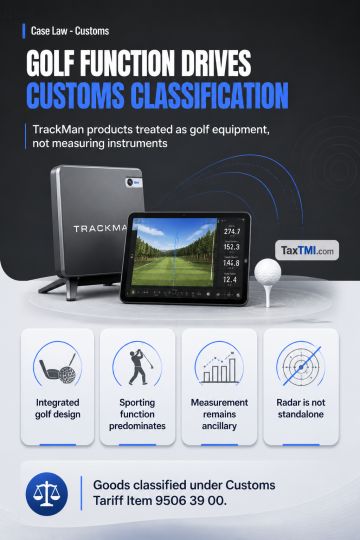
Integrated golf function determines classification, placing launch monitors and simulators under other golf equipment rather than measuring instrument...
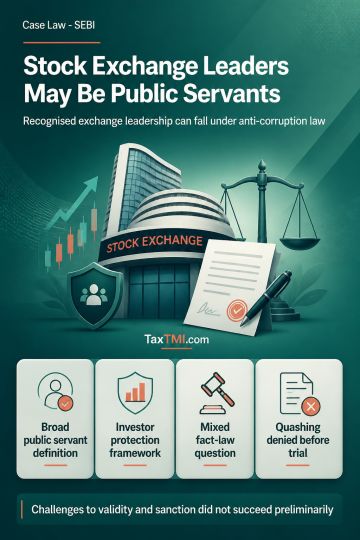
Public servant status under anti-corruption law extends to recognised stock exchange leadership; constitutional and sanction challenges do not succeed...
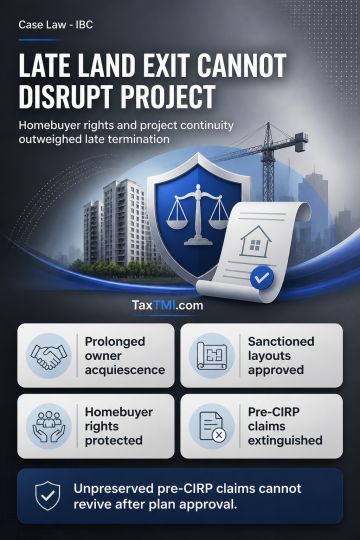
Acquiescence, homebuyer protection and clean-slate resolution principles prevent landowners from disrupting an integrated project through late termina...
Page of 4792
Press 'Enter' after typing page number.
1001 to 1020 of 95833 Results
❮
❯
❯❯
0 / 200
Expand Note
Add to Folder
No Folders have been created
+
Are you sure you want to delete "My most important" ?
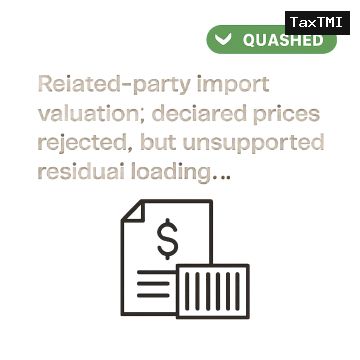
Related-party imports can justify rejection of declared transaction value where the importer and foreign supplier are owned or controlled by the same family and the relationship was not disclosed; the Tribunal treated this as sufficient reason to doubt the truth of the declared value under the valuation rules. Once transaction value is rejected, re-determination must follow the prescribed sequential valuation scheme, with a rule-by-rule basis identified for each item. The Tribunal sustained valuation only for specified goods where supplier invoices or contemporaneous imports supported the adjustment, but set aside Rule 8 valuations based on unsupported materials such as manufacturers' invoices, handwritten cost sheets, domestic sale prices, or arbitrary loading. Consequential confiscation, redemption fine, and personal penalties were quashed.
Related-party imports can justify rejection of declared transaction value where the importer and foreign supplier are owned or controlled by the same family and the relationship was not disclosed; the Tribunal treated this as sufficient reason to doubt the truth of the declared value under the valuation rules. Once transaction value is rejected, re-determination must follow the prescribed sequential valuation scheme, with a rule-by-rule basis identified for each item. The Tribunal sustained valuation only for specified goods where supplier invoices or contemporaneous imports supported the adjustment, but set aside Rule 8 valuations based on unsupported materials such as manufacturers' invoices, handwritten cost sheets, domestic sale prices, or arbitrary loading. Consequential confiscation, redemption fine, and personal penalties were quashed.
Note: It is a system-generated summary and is for quick reference only.
 TaxTMI
 of 4792
















 Join Channel


 TaxTMI