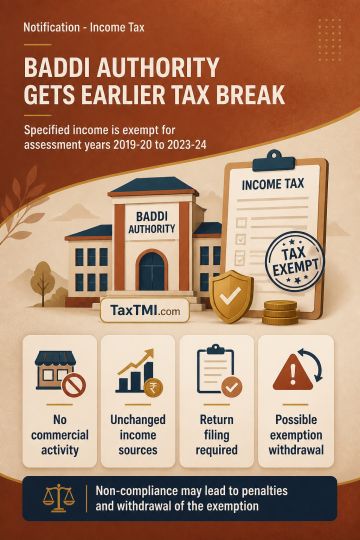
Specified income of Baddi Barotiwala Nalagarh Development Authority receives conditional tax exemption, retrospectively covering its designated assess...
Specified development authority income receives retrospective tax exemption, subject to non-commercial activity, unchanged income sources, and return-...
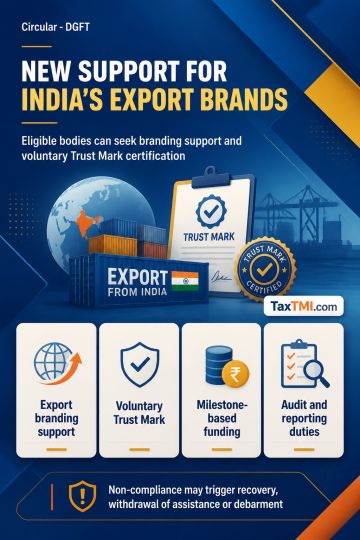
Unified Brand India framework introduces voluntary Trust Mark certification and funding support for export branding, packaging and global promotional ...
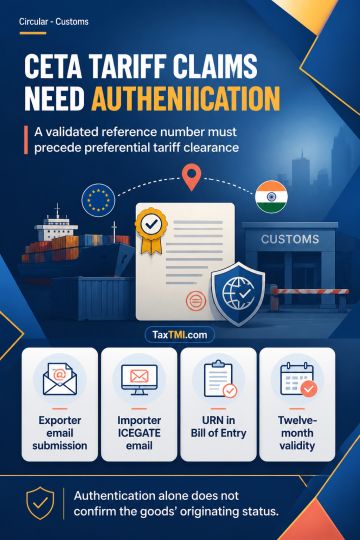
Origin Declaration authentication governs preferential tariff claims under India-UK CETA, requiring a validated reference number before import clearan...
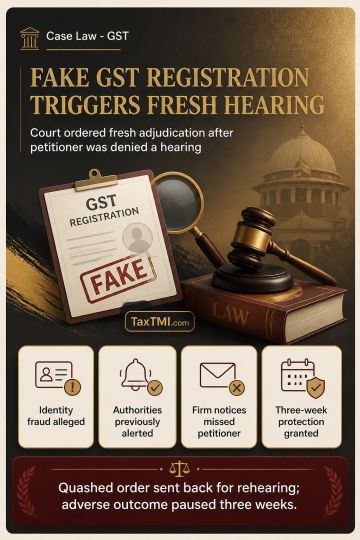
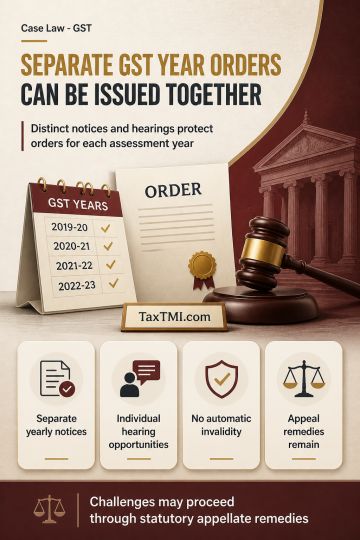
Separate assessment orders for different years remain valid when distinct notices and hearing opportunities prevent prejudice from combined proceeding...
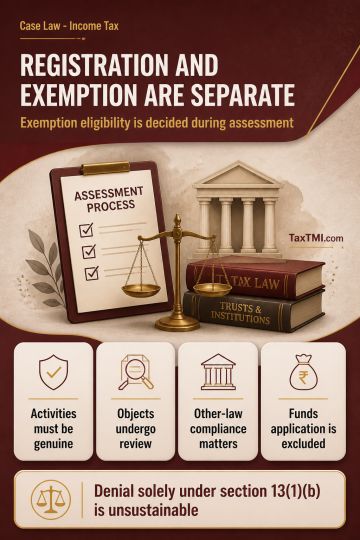
Defined public benefit can retain charitable character; registration renewal requires examining genuine activities and legal compliance, not surplus a...
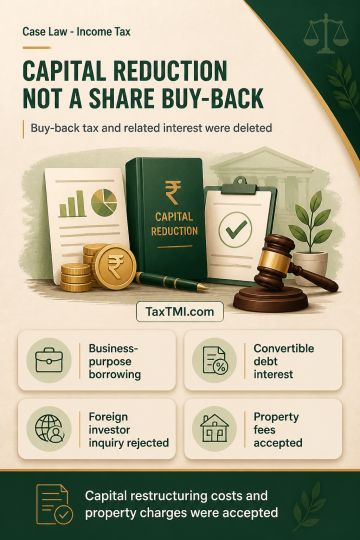
Capital reduction is distinct from share buy-back, preventing buy-back tax; restructuring interest and related business deductions also survive scruti...
Page of 4792
Press 'Enter' after typing page number.
981 to 1000 of 95833 Results
❮
❯
❯❯
0 / 200
Expand Note
Add to Folder
No Folders have been created
+
Are you sure you want to delete "My most important" ?
Related-party imports can justify rejection of declared transaction value where the importer and foreign supplier are owned or controlled by the same family and the relationship was not disclosed; the Tribunal treated this as sufficient reason to doubt the truth of the declared value under the valuation rules. Once transaction value is rejected, re-determination must follow the prescribed sequential valuation scheme, with a rule-by-rule basis identified for each item. The Tribunal sustained valuation only for specified goods where supplier invoices or contemporaneous imports supported the adjustment, but set aside Rule 8 valuations based on unsupported materials such as manufacturers' invoices, handwritten cost sheets, domestic sale prices, or arbitrary loading. Consequential confiscation, redemption fine, and personal penalties were quashed.
Related-party imports can justify rejection of declared transaction value where the importer and foreign supplier are owned or controlled by the same family and the relationship was not disclosed; the Tribunal treated this as sufficient reason to doubt the truth of the declared value under the valuation rules. Once transaction value is rejected, re-determination must follow the prescribed sequential valuation scheme, with a rule-by-rule basis identified for each item. The Tribunal sustained valuation only for specified goods where supplier invoices or contemporaneous imports supported the adjustment, but set aside Rule 8 valuations based on unsupported materials such as manufacturers' invoices, handwritten cost sheets, domestic sale prices, or arbitrary loading. Consequential confiscation, redemption fine, and personal penalties were quashed.
Note: It is a system-generated summary and is for quick reference only.
 TaxTMI
 of 4792







 Join Channel


 TaxTMI