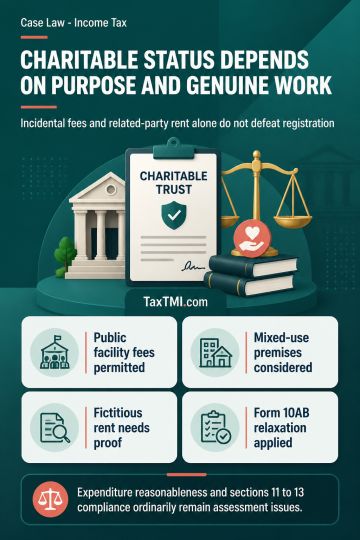
Charitable registration turns on predominant purpose and genuine activities, while incidental fees and related-party rent require supporting adverse m...
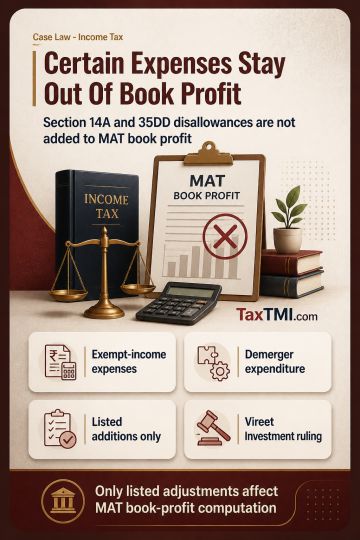
MAT book-profit adjustments exclude disallowances for exempt-income expenditure and demerger expenditure unless expressly listed under the statutory c...
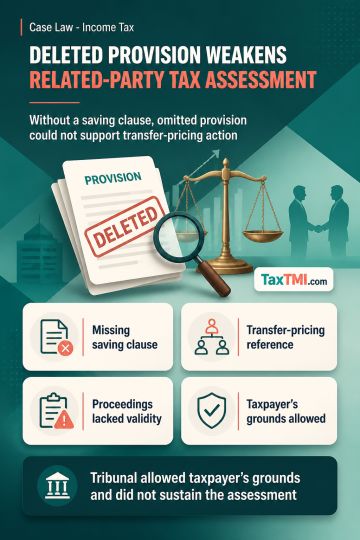
Omitted specified domestic transaction provision invalidates related-party expenditure transfer-pricing references and assessments based on consequent...
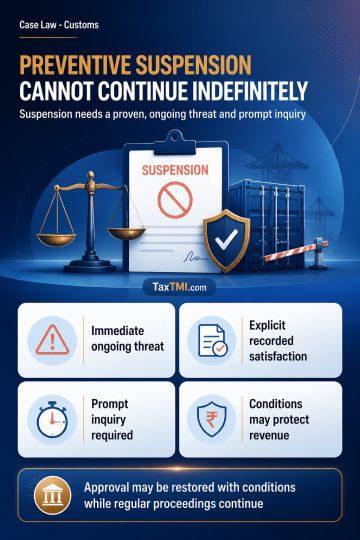
Preventive suspension requires an immediate continuing threat and cannot become indefinite without inquiry, fresh evidence, or proportionate safeguard...
Page of 4800
Press 'Enter' after typing page number.
261 to 280 of 96000 Results
❮
❯
❯❯
0 / 200
Expand Note
Add to Folder
No Folders have been created
+
Are you sure you want to delete "My most important" ?
Related-party imports can justify rejection of declared transaction value where the importer and foreign supplier are owned or controlled by the same family and the relationship was not disclosed; the Tribunal treated this as sufficient reason to doubt the truth of the declared value under the valuation rules. Once transaction value is rejected, re-determination must follow the prescribed sequential valuation scheme, with a rule-by-rule basis identified for each item. The Tribunal sustained valuation only for specified goods where supplier invoices or contemporaneous imports supported the adjustment, but set aside Rule 8 valuations based on unsupported materials such as manufacturers' invoices, handwritten cost sheets, domestic sale prices, or arbitrary loading. Consequential confiscation, redemption fine, and personal penalties were quashed.
Related-party imports can justify rejection of declared transaction value where the importer and foreign supplier are owned or controlled by the same family and the relationship was not disclosed; the Tribunal treated this as sufficient reason to doubt the truth of the declared value under the valuation rules. Once transaction value is rejected, re-determination must follow the prescribed sequential valuation scheme, with a rule-by-rule basis identified for each item. The Tribunal sustained valuation only for specified goods where supplier invoices or contemporaneous imports supported the adjustment, but set aside Rule 8 valuations based on unsupported materials such as manufacturers' invoices, handwritten cost sheets, domestic sale prices, or arbitrary loading. Consequential confiscation, redemption fine, and personal penalties were quashed.
Note: It is a system-generated summary and is for quick reference only.
 TaxTMI
 of 4800



 Join Channel


 TaxTMI