Statutory sanction for delayed reassessment requires approval from the prescribed authority; approval by an inferior authority invalidates jurisdictio...
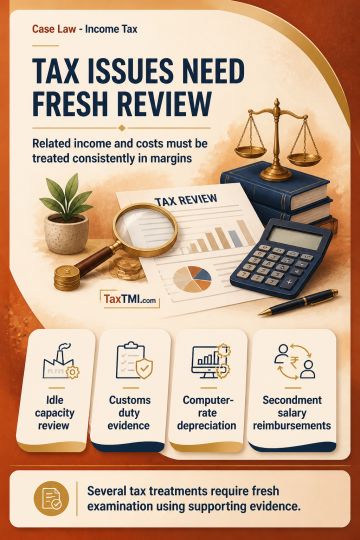
Transfer pricing margin adjustments require matching treatment of non-operating income and related costs, with comparability issues reconsidered on ev...
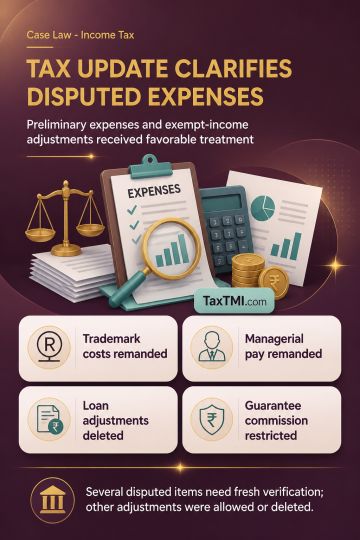
Preliminary-expense amortisation and MAT exempt-income adjustments prevailed, while trademark costs and managerial remuneration require fresh verifica...
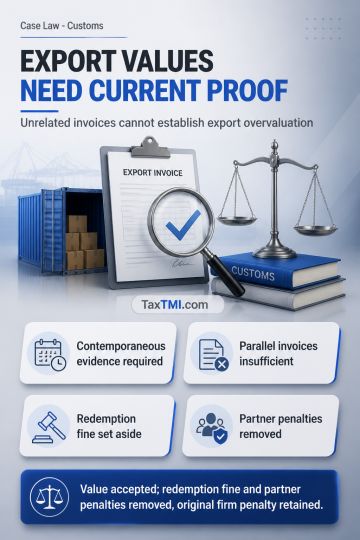
Export valuation requires contemporaneous evidence; unrelated invoices cannot prove overvaluation, and dual penalties on firm and partner are impermis...
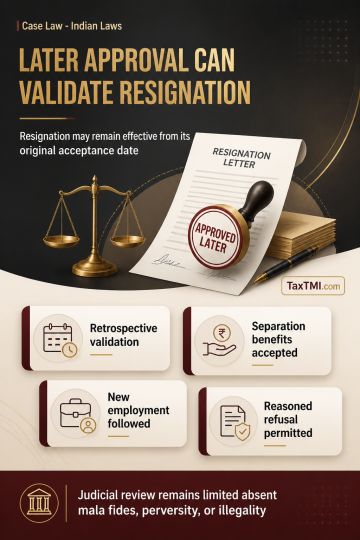
Ratification of resignation acceptance validates separation retrospectively, while withdrawal may be refused through reasoned administrative discretio...
Nature-dependent electricity contracts receive new Ind AS accounting, hedge designation, transition and financial-statement disclosure requirements fr...
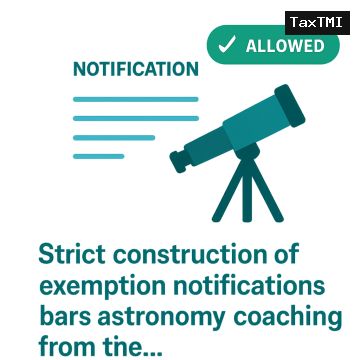
Strict construction of exemption notifications barred astronomy coaching from the recreational activities exemption in Entry 8 of Notification No. 25/2012-ST, because the word "culture" was read in context with arts and sports under noscitur a sociis and could not be stretched to scientific training. The Tribunal therefore upheld denial of exemption and sustained the demand on merits. It also held that non-registration, non-filing of returns, and long-term commercial conduct amounted to suppression of material facts, so the extended period, interest, and penalty were justified. Cum-tax benefit under section 67(2) was allowed, but only for limited recomputation of the demand.
Strict construction of exemption notifications barred astronomy coaching from the recreational activities exemption in Entry 8 of Notification No. 25/2012-ST, because the word "culture" was read in context with arts and sports under noscitur a sociis and could not be stretched to scientific training. The Tribunal therefore upheld denial of exemption and sustained the demand on merits. It also held that non-registration, non-filing of returns, and long-term commercial conduct amounted to suppression of material facts, so the extended period, interest, and penalty were justified. Cum-tax benefit under section 67(2) was allowed, but only for limited recomputation of the demand.
Note: It is a system-generated summary and is for quick reference only.
 TaxTMI
 of 4805












 Join Channel


 TaxTMI