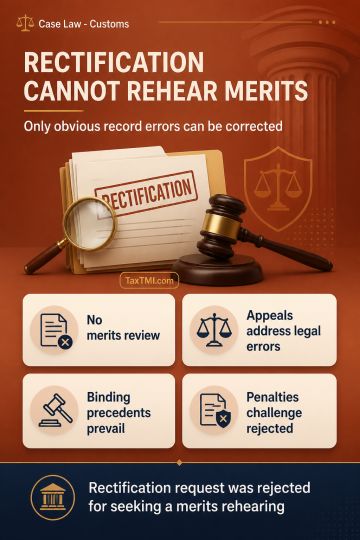
Rectification of mistake remains limited to self-evident record errors, preventing merits review through miscellaneous applications and preserving fin...
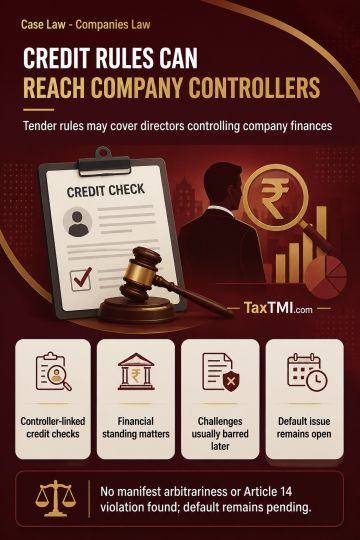
Tender creditworthiness conditions may extend to de facto Promoter Directors, with post-participation challenges generally barred absent arbitrariness...
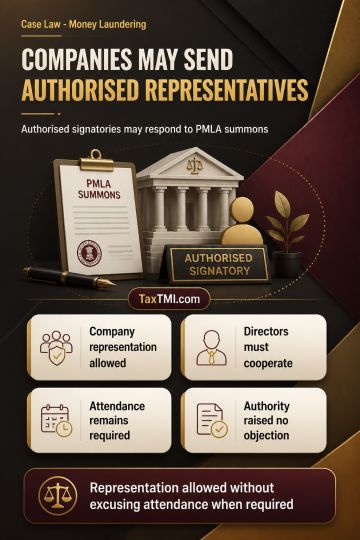
Corporate representation in PMLA summons proceedings permitted through an authorised signatory, subject to directors' continuing cooperation and atten...
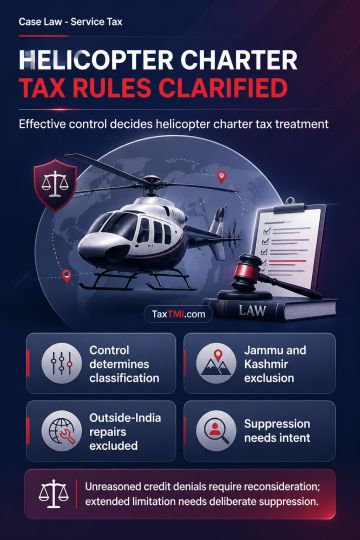
Helicopter charter classification requires effective control analysis, while territorial performance, reasoned credit orders and wilful suppression de...
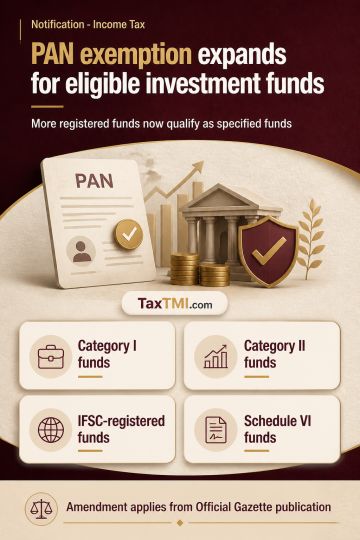
Specified fund definition expands PAN exemption eligibility for registered alternative investment funds and qualifying International Financial Service...
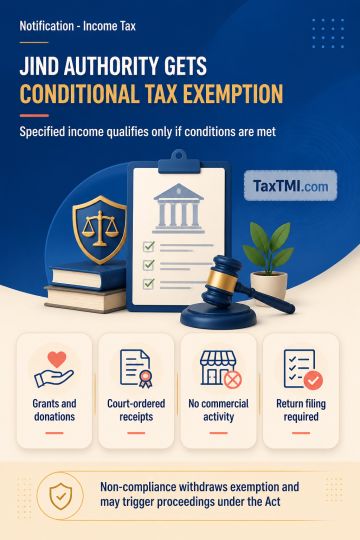
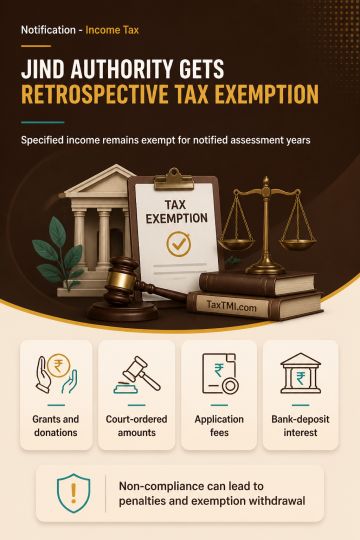
Tax exemption for specified legal-services authority income applies retrospectively, subject to non-commercial activity, unchanged income sources, and...
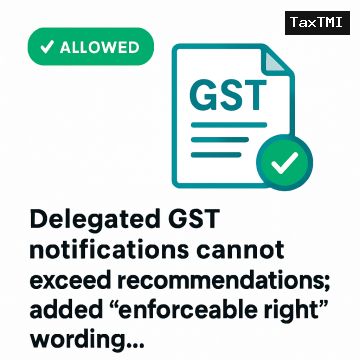
GST notifications issued under Sections 9 and 11 operate as subordinate legislation and cannot travel beyond the GST Council's recommendation. The HC held that the impugned notifications were ultra vires only to the extent they added the expression "enforceable right in a court of law", because that phrase went beyond the recommendation's reference to an actionable claim; the remaining part of the notifications stayed valid. It further held that the GST Council has no constitutional power of ratification under Article 279A, so the 22nd meeting could not cure the unsupported addition and was without jurisdiction. The writ petitions were allowed and notices founded on the invalid part were set aside, with liberty to issue fresh notices in line with the sustained notifications.
GST notifications issued under Sections 9 and 11 operate as subordinate legislation and cannot travel beyond the GST Council's recommendation. The HC held that the impugned notifications were ultra vires only to the extent they added the expression "enforceable right in a court of law", because that phrase went beyond the recommendation's reference to an actionable claim; the remaining part of the notifications stayed valid. It further held that the GST Council has no constitutional power of ratification under Article 279A, so the 22nd meeting could not cure the unsupported addition and was without jurisdiction. The writ petitions were allowed and notices founded on the invalid part were set aside, with liberty to issue fresh notices in line with the sustained notifications.
Note: It is a system-generated summary and is for quick reference only.
 TaxTMI
 of 4794




 Join Channel


 TaxTMI