Transaction value rejection requires reliable corroboration; refundable VAT is excluded and temporary registration does not defeat new-vehicle exempti...
Appellate jurisdiction remains available where a wrist-worn gold ornament cannot conclusively be characterised as imported baggage at the preliminary ...
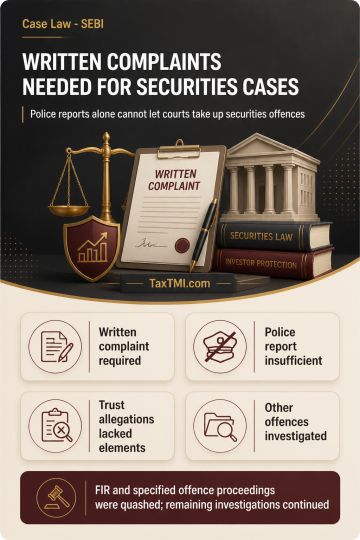
Written complaint requirement bars cognizance on police reports for securities offences, while unsupported breach of trust and cheating allegations fa...
Risk-based postal import clearance standardises electronic assessment, document requests, duty realisation and delivery controls at Foreign Post Offic...
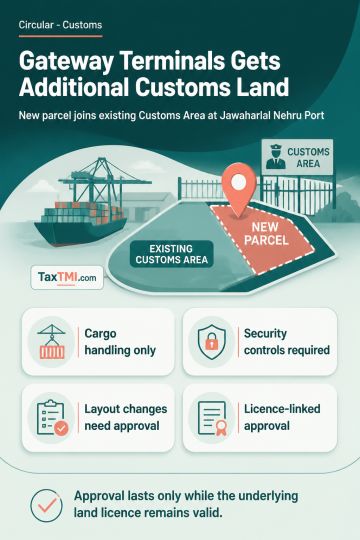
Customs Cargo Service Provider appointment extends custodianship to additional terminal land, subject to cargo-control, security and licence condition...
GST notifications issued under Sections 9 and 11 operate as subordinate legislation and cannot travel beyond the GST Council's recommendation. The HC held that the impugned notifications were ultra vires only to the extent they added the expression "enforceable right in a court of law", because that phrase went beyond the recommendation's reference to an actionable claim; the remaining part of the notifications stayed valid. It further held that the GST Council has no constitutional power of ratification under Article 279A, so the 22nd meeting could not cure the unsupported addition and was without jurisdiction. The writ petitions were allowed and notices founded on the invalid part were set aside, with liberty to issue fresh notices in line with the sustained notifications.
GST notifications issued under Sections 9 and 11 operate as subordinate legislation and cannot travel beyond the GST Council's recommendation. The HC held that the impugned notifications were ultra vires only to the extent they added the expression "enforceable right in a court of law", because that phrase went beyond the recommendation's reference to an actionable claim; the remaining part of the notifications stayed valid. It further held that the GST Council has no constitutional power of ratification under Article 279A, so the 22nd meeting could not cure the unsupported addition and was without jurisdiction. The writ petitions were allowed and notices founded on the invalid part were set aside, with liberty to issue fresh notices in line with the sustained notifications.
Note: It is a system-generated summary and is for quick reference only.
 TaxTMI
 of 4784






 Join Channel


 TaxTMI