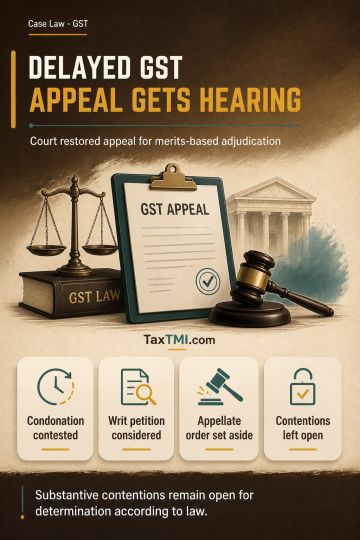
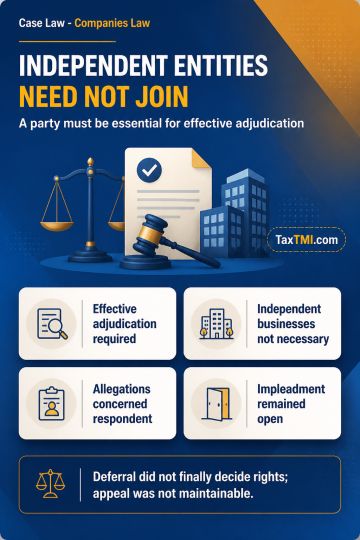
Necessary-party requirements limit impleadment of independent entities, while deferred consideration does not create an appealable adverse determinati...
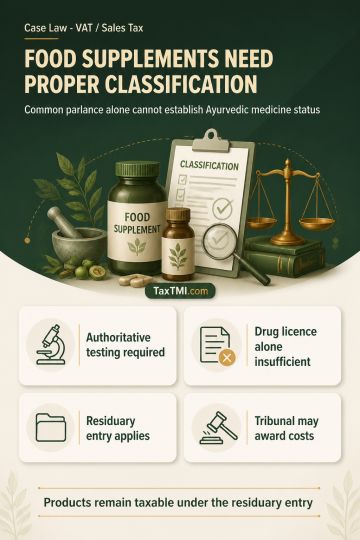
Food supplement classification requires common parlance and authoritative tests, preventing treatment as proprietary Ayurvedic medicines without suppo...
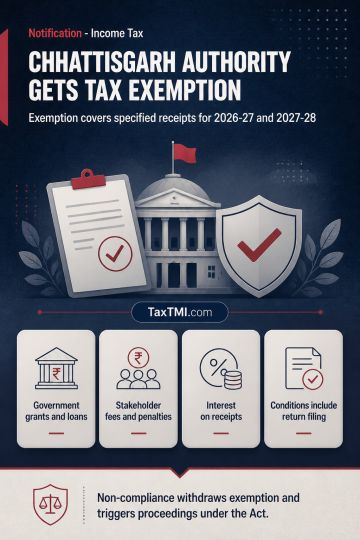
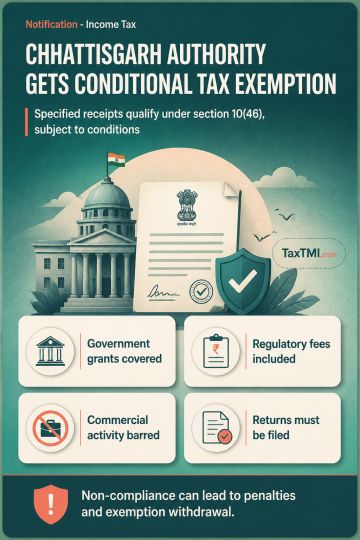
Specified regulatory authority income receives conditional tax exemption, subject to non-commercial activity, unchanged income character, and return f...
Tax exemption for regulatory authority income applies retrospectively, subject to non-commercial activity, unchanged income sources, and return-filing...
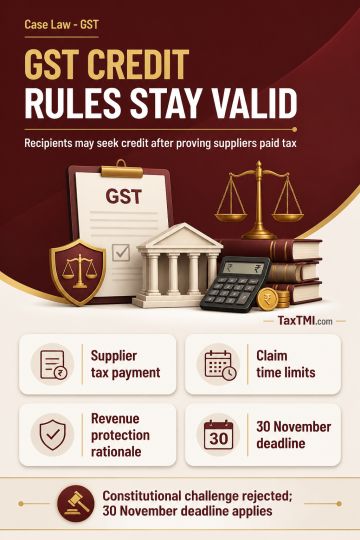
Input tax credit conditions remain constitutionally valid, with eligible recipient claims considered under GST circulars and retrospective filing dead...
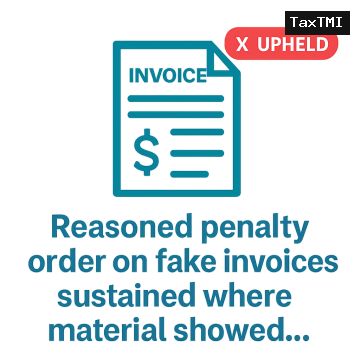
Penalty liability of firm partners for fraudulent input tax credit was upheld where the adjudicating authority linked them, through their own statements, WhatsApp chats and other electronic material, to fake invoices, fake e-way bills and hawala routing of funds. The High Court held that the order was a reasoned adjudication and that the findings showed the firm's affairs were carried on with the petitioners' knowledge and consent, bringing them within the liability contemplated under Section 122(1A). The challenge based on breach of natural justice failed, Kranti Associates was held inapplicable, and no case for interference under Article 226 was made out. The writ petition was rejected.
Penalty liability of firm partners for fraudulent input tax credit was upheld where the adjudicating authority linked them, through their own statements, WhatsApp chats and other electronic material, to fake invoices, fake e-way bills and hawala routing of funds. The High Court held that the order was a reasoned adjudication and that the findings showed the firm's affairs were carried on with the petitioners' knowledge and consent, bringing them within the liability contemplated under Section 122(1A). The challenge based on breach of natural justice failed, Kranti Associates was held inapplicable, and no case for interference under Article 226 was made out. The writ petition was rejected.
Note: It is a system-generated summary and is for quick reference only.
 TaxTMI
 of 4792








 Join Channel


 TaxTMI