Prolonged sterilisation of development rights supports capital-gains treatment, while business-income disallowances cannot govern capital-gains comput...
Additional evidence in transfer pricing dispute leads to fresh examination, while tax deductions, TDS credit, fee and refund interest require verifica...
Category II AIF pass-through taxation preserves non-business income character; investment receipts cannot be reclassified without applying recognised ...
Mutual fund maturity rules require proper rollover, redemption, disclosure, and due diligence; investor gains cannot excuse regulatory breaches or pen...
Threshold exemption excludes exempt services, while stamp-paper purchases avoid reverse charge; consequential service tax penalties were also set asid...
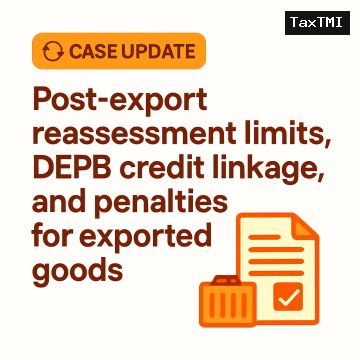
After export and assessment of shipping bills, reassessment is unavailable except through recognised legal modes such as appeal, finalisation of provisional assessment, exporter-requested amendment, or correction of clerical error; the declared value and description in already exported goods cannot be reopened. The note further states that DEPB credit is linked to FOB value and transaction value, so customs redetermination of assessable value does not justify denial of DEPB benefit or recovery of duty through used scrips. It also explains that goods already exported fall outside confiscation powers for export goods, and that penalties fail when the underlying duty demand is unsustainable or when false declaration is not established.
After export and assessment of shipping bills, reassessment is unavailable except through recognised legal modes such as appeal, finalisation of provisional assessment, exporter-requested amendment, or correction of clerical error; the declared value and description in already exported goods cannot be reopened. The note further states that DEPB credit is linked to FOB value and transaction value, so customs redetermination of assessable value does not justify denial of DEPB benefit or recovery of duty through used scrips. It also explains that goods already exported fall outside confiscation powers for export goods, and that penalties fail when the underlying duty demand is unsustainable or when false declaration is not established.
Note: It is a system-generated summary and is for quick reference only.
 TaxTMI
 of 4792




















 Join Channel


 TaxTMI
