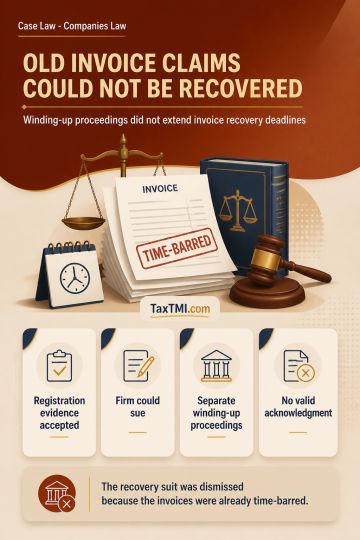
Invoice-based recovery claims remain time-barred despite separate winding-up proceedings, absent valid acknowledgment or part-payment of the disputed ...
Extended limitation fails without specific suppression allegations, while overseas employee secondment remains taxable as manpower supply within norma...
Time-share accommodation classification excludes Club or Association Service where purchasers receive contractual occupancy rights without genuine mem...
CENVAT credit for trading requires reversal, while taxable-service rental credit remains proportionately available and limitation issues await resolut...
Vicarious liability for dishonoured company cheques may extend to non-signatory directors where complaints contain foundational responsibility avermen...
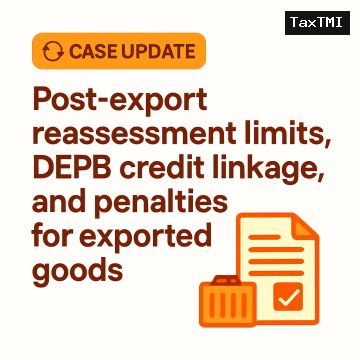
After export and assessment of shipping bills, reassessment is unavailable except through recognised legal modes such as appeal, finalisation of provisional assessment, exporter-requested amendment, or correction of clerical error; the declared value and description in already exported goods cannot be reopened. The note further states that DEPB credit is linked to FOB value and transaction value, so customs redetermination of assessable value does not justify denial of DEPB benefit or recovery of duty through used scrips. It also explains that goods already exported fall outside confiscation powers for export goods, and that penalties fail when the underlying duty demand is unsustainable or when false declaration is not established.
After export and assessment of shipping bills, reassessment is unavailable except through recognised legal modes such as appeal, finalisation of provisional assessment, exporter-requested amendment, or correction of clerical error; the declared value and description in already exported goods cannot be reopened. The note further states that DEPB credit is linked to FOB value and transaction value, so customs redetermination of assessable value does not justify denial of DEPB benefit or recovery of duty through used scrips. It also explains that goods already exported fall outside confiscation powers for export goods, and that penalties fail when the underlying duty demand is unsustainable or when false declaration is not established.
Note: It is a system-generated summary and is for quick reference only.
 TaxTMI
 of 4803














 Join Channel


 TaxTMI