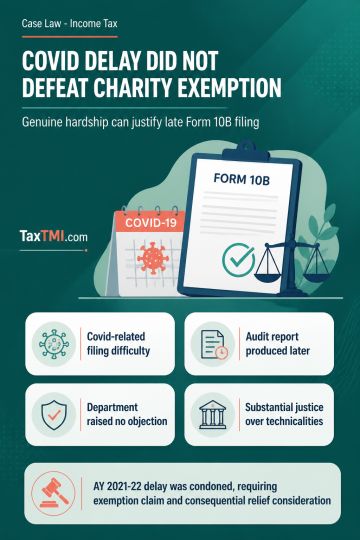
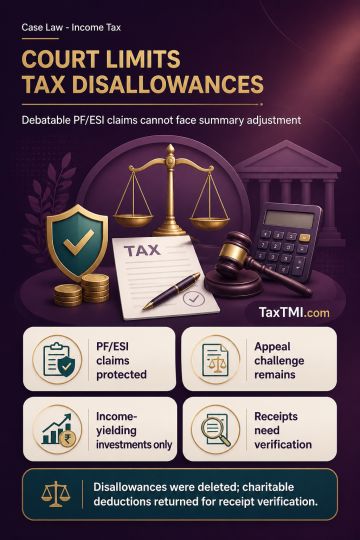
Belated Form 10B filing during Covid-19 cannot defeat charitable exemption where genuine hardship warrants condonation and substantial justice prevail...
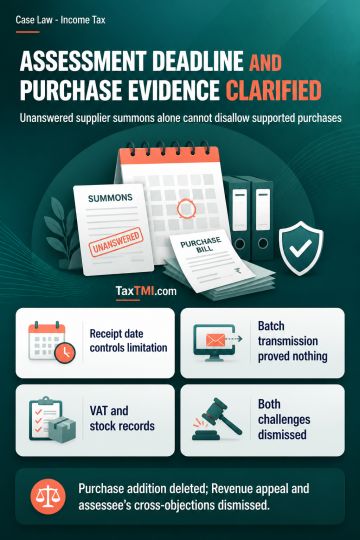
Limitation for consequential assessments runs from prescribed authority receipt, while verified purchases cannot be disallowed merely for unanswered s...
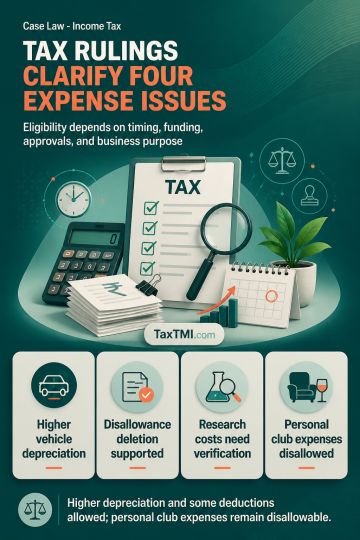
Higher depreciation for qualifying commercial vehicles, exempt-income disallowance, research deduction verification, and club-expense treatment clarif...
Charitable registration renewal cannot become an assessment of receipts, profitability or annual exemption compliance, requiring renewal and donation ...
Page of 4805
Press 'Enter' after typing page number.
61 to 80 of 96100 Results
❮
❯
❯❯
0 / 200
Expand Note
Add to Folder
No Folders have been created
+
Are you sure you want to delete "My most important" ?
Section 32A of the Insolvency and Bankruptcy Code protected the corporate debtor from prosecution for offences committed before commencement of CIRP once the resolution plan was approved and management passed to a new, unconnected dispensation. The alleged environmental contraventions were attributed to the erstwhile management, so continuation of the criminal case against the corporate debtor was contrary to the clean slate objective and legally unsustainable. The Court also noted that offences under Section 15 of the Environment (Protection) Act had been decriminalised by the Jan Vishwas (Amendment of Provisions) Act, 2023, replacing imprisonment with civil penalty, and held that this subsequent beneficial change furnished an additional ground to terminate the prosecution.
Section 32A of the Insolvency and Bankruptcy Code protected the corporate debtor from prosecution for offences committed before commencement of CIRP once the resolution plan was approved and management passed to a new, unconnected dispensation. The alleged environmental contraventions were attributed to the erstwhile management, so continuation of the criminal case against the corporate debtor was contrary to the clean slate objective and legally unsustainable. The Court also noted that offences under Section 15 of the Environment (Protection) Act had been decriminalised by the Jan Vishwas (Amendment of Provisions) Act, 2023, replacing imprisonment with civil penalty, and held that this subsequent beneficial change furnished an additional ground to terminate the prosecution.
Note: It is a system-generated summary and is for quick reference only.
 TaxTMI
 of 4805














 Join Channel



 TaxTMI