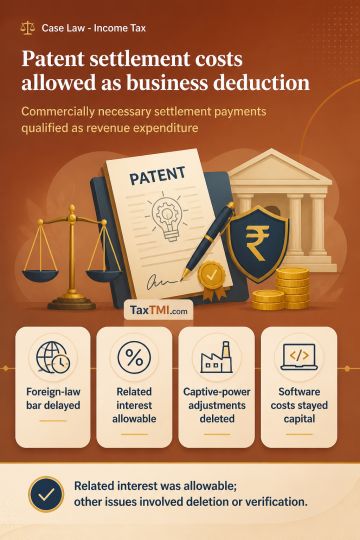
Patent-settlement expenditure treated as commercially expedient revenue outlay, with foreign-law restrictions inapplicable before the prospective amen...
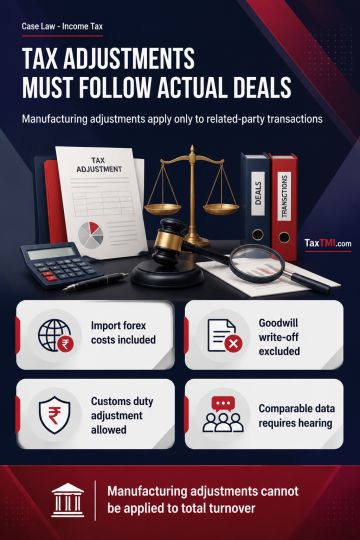
International transaction benchmarking restricts transfer pricing adjustments to associated-enterprise dealings, while functional comparability govern...
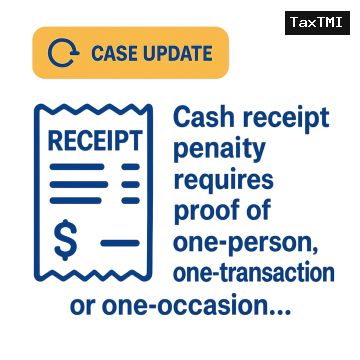
Penalty for cash receipts is attracted only when the receipt falls within one of the three statutory situations under section 269ST: receipt from a person in a day, receipt for a single transaction, or receipt relating to one event or occasion. The note explains that admitted cash sales, or an assessment completed by estimating profit on those sales, are not enough by themselves; the penalty order must record facts showing the specific statutory breach. In the absence of such findings, levy of penalty under section 271DA is unjustified, and the same reasoning applies where the facts and issue are identical across years.
Penalty for cash receipts is attracted only when the receipt falls within one of the three statutory situations under section 269ST: receipt from a person in a day, receipt for a single transaction, or receipt relating to one event or occasion. The note explains that admitted cash sales, or an assessment completed by estimating profit on those sales, are not enough by themselves; the penalty order must record facts showing the specific statutory breach. In the absence of such findings, levy of penalty under section 271DA is unjustified, and the same reasoning applies where the facts and issue are identical across years.
Note: It is a system-generated summary and is for quick reference only.
 TaxTMI
 of 4784




 Join Channel


 TaxTMI
