Building-plan sanction charges require statutory authority; unauthorised fees and GST were quashed, while labour cess must follow prescribed collectio...
Pure-agent exclusion fails where hotel booking facilitators receive third-party services themselves, making entire customer consideration taxable as r...
Transfer pricing requires evidence for AMP transactions, functionally reliable comparables, and appropriate aggregation or Berry Ratio benchmarking me...
Revisionary jurisdiction cannot reopen share capital assessments where adequate inquiry supports a permissible view and no independent error is establ...
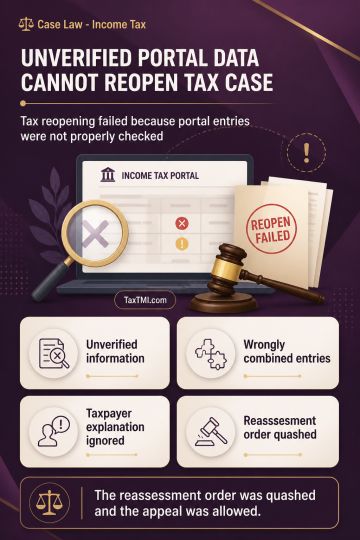
Reassessment jurisdiction fails where unverified portal information is aggregated without examining the taxpayer's explanation or relevance of entries...
Statutory sanction for delayed reassessment requires approval from the prescribed authority; approval by an inferior authority invalidates jurisdictio...
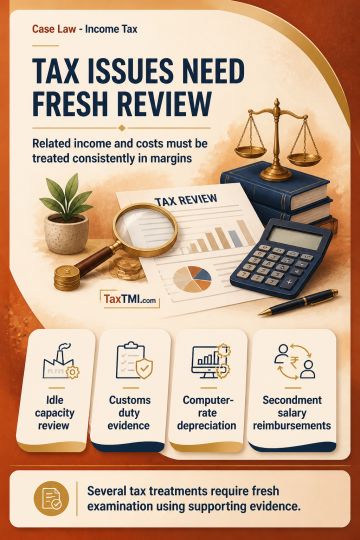
Transfer pricing margin adjustments require matching treatment of non-operating income and related costs, with comparability issues reconsidered on ev...
Turnover is a relevant comparability factor in software development services under TNMM because scale affects profitability through economies of scale, bargaining strength and asset-risk profile; on that basis, the Tribunal excluded high-turnover companies from the final comparable set. It also accepted exclusion of three additional companies on the same reasoning. On delayed trade receivables, the Tribunal held that deferred receivables can constitute an international transaction, and that working capital adjustment does not automatically absorb invoice-wise delay beyond the agreed credit period. The interest adjustment was sustained in principle, but recomputation was directed after netting receivables and payables with the same associated enterprise and applying LIBOR plus 200 basis points for foreign-currency invoices.
Turnover is a relevant comparability factor in software development services under TNMM because scale affects profitability through economies of scale, bargaining strength and asset-risk profile; on that basis, the Tribunal excluded high-turnover companies from the final comparable set. It also accepted exclusion of three additional companies on the same reasoning. On delayed trade receivables, the Tribunal held that deferred receivables can constitute an international transaction, and that working capital adjustment does not automatically absorb invoice-wise delay beyond the agreed credit period. The interest adjustment was sustained in principle, but recomputation was directed after netting receivables and payables with the same associated enterprise and applying LIBOR plus 200 basis points for foreign-currency invoices.
Note: It is a system-generated summary and is for quick reference only.
 TaxTMI
 of 4803


















 Join Channel



 TaxTMI
