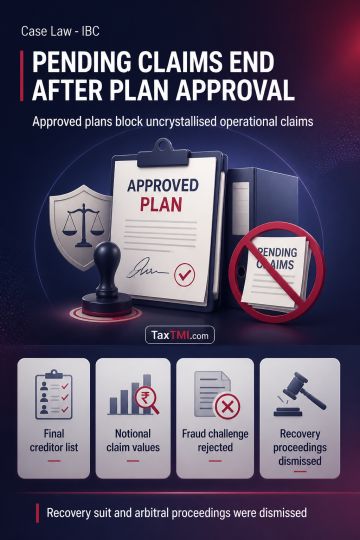
Clean slate principle extinguishes uncrystallised operational claims and bars continuation of pending recovery and arbitral proceedings after plan app...
Works contract classification governs composite layout-development contracts where VAT-paid goods are transferred alongside construction and infrastru...
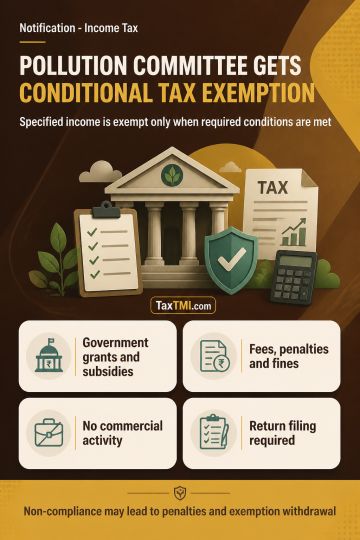
Specified income tax exemption for pollution control body remains conditional on non-commercial activity, unchanged income character, and return filin...
Jurisdictional facts in certificate-of-origin discrepancies can support customs show-cause proceedings, leaving factual explanations for departmental ...
Section 117 of the Customs Act is a residual penal provision and can be invoked only where no express penalty exists for the same contravention. For a Customs Broker governed by the Customs Broker Licensing Regulations, 2018, the Tribunal held that the Regulations themselves provided the penal framework, so Section 117 could not be used for the alleged due diligence breach. It also found no evidence linking the broker to fraudulent export activity, and the penalty had been imposed only for an alleged regulatory breach. On that basis, the Section 117 penalty was set aside.
Section 117 of the Customs Act is a residual penal provision and can be invoked only where no express penalty exists for the same contravention. For a Customs Broker governed by the Customs Broker Licensing Regulations, 2018, the Tribunal held that the Regulations themselves provided the penal framework, so Section 117 could not be used for the alleged due diligence breach. It also found no evidence linking the broker to fraudulent export activity, and the penalty had been imposed only for an alleged regulatory breach. On that basis, the Section 117 penalty was set aside.
Note: It is a system-generated summary and is for quick reference only.
 TaxTMI
 of 4792












 Join Channel



 TaxTMI