Necessary-party requirements limit impleadment of independent entities, while deferred consideration does not create an appealable adverse determinati...
Food supplement classification requires common parlance and authoritative tests, preventing treatment as proprietary Ayurvedic medicines without suppo...
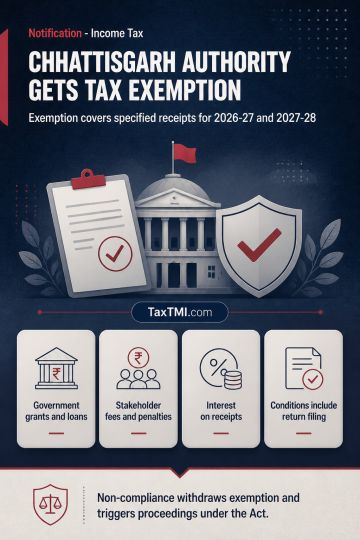
Specified regulatory authority income receives conditional tax exemption, subject to non-commercial activity, unchanged income character, and return f...
Tax exemption for regulatory authority income applies retrospectively, subject to non-commercial activity, unchanged income sources, and return-filing...
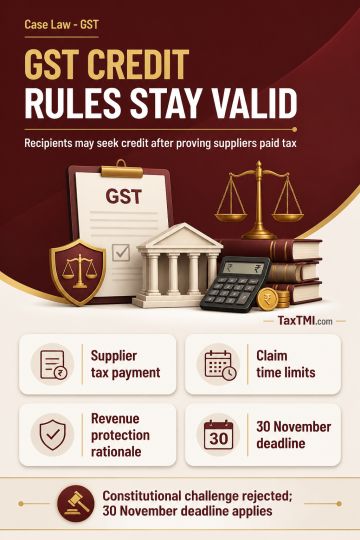
Input tax credit conditions remain constitutionally valid, with eligible recipient claims considered under GST circulars and retrospective filing dead...
Section 117 of the Customs Act is a residual penal provision and can be invoked only where no express penalty exists for the same contravention. For a Customs Broker governed by the Customs Broker Licensing Regulations, 2018, the Tribunal held that the Regulations themselves provided the penal framework, so Section 117 could not be used for the alleged due diligence breach. It also found no evidence linking the broker to fraudulent export activity, and the penalty had been imposed only for an alleged regulatory breach. On that basis, the Section 117 penalty was set aside.
Section 117 of the Customs Act is a residual penal provision and can be invoked only where no express penalty exists for the same contravention. For a Customs Broker governed by the Customs Broker Licensing Regulations, 2018, the Tribunal held that the Regulations themselves provided the penal framework, so Section 117 could not be used for the alleged due diligence breach. It also found no evidence linking the broker to fraudulent export activity, and the penalty had been imposed only for an alleged regulatory breach. On that basis, the Section 117 penalty was set aside.
Note: It is a system-generated summary and is for quick reference only.
 TaxTMI
 of 4792











 Join Channel



 TaxTMI