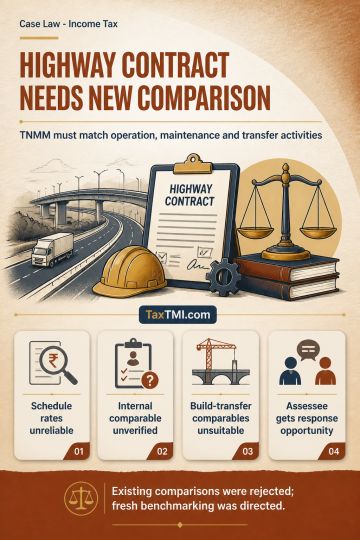
Functional comparability under TNMM requires highway contract benchmarks to reflect operation, maintenance and transfer activities, requiring fresh be...
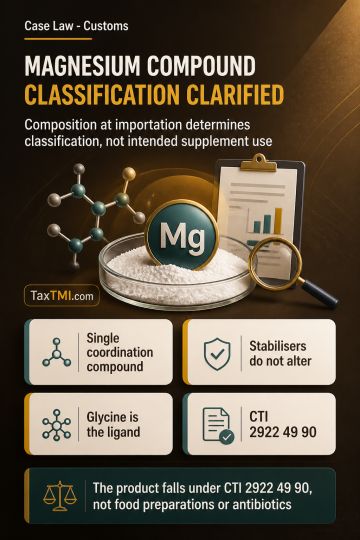
Objective characteristics govern magnesium bis-glycinate chelate classification as an amino-acid coordination compound, not a food preparation or anti...
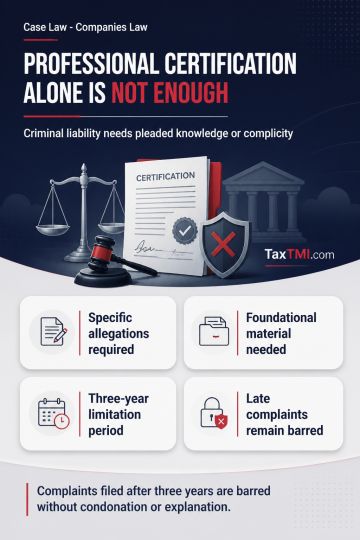
Independent professional certification requires pleaded knowledge or complicity for criminal liability; untimely complaints remain barred by limitatio...
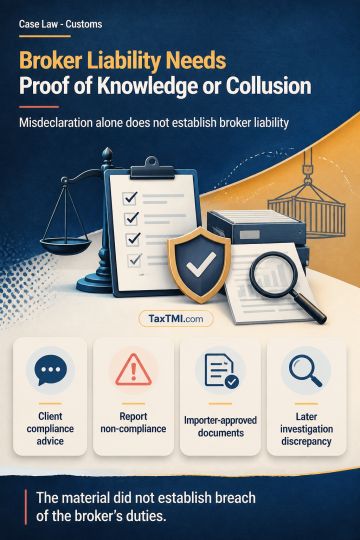
Section 117 of the Customs Act is a residual penal provision and can be invoked only where no express penalty exists for the same contravention. For a Customs Broker governed by the Customs Broker Licensing Regulations, 2018, the Tribunal held that the Regulations themselves provided the penal framework, so Section 117 could not be used for the alleged due diligence breach. It also found no evidence linking the broker to fraudulent export activity, and the penalty had been imposed only for an alleged regulatory breach. On that basis, the Section 117 penalty was set aside.
Section 117 of the Customs Act is a residual penal provision and can be invoked only where no express penalty exists for the same contravention. For a Customs Broker governed by the Customs Broker Licensing Regulations, 2018, the Tribunal held that the Regulations themselves provided the penal framework, so Section 117 could not be used for the alleged due diligence breach. It also found no evidence linking the broker to fraudulent export activity, and the penalty had been imposed only for an alleged regulatory breach. On that basis, the Section 117 penalty was set aside.
Note: It is a system-generated summary and is for quick reference only.
 TaxTMI
 of 4782









 Join Channel



 TaxTMI