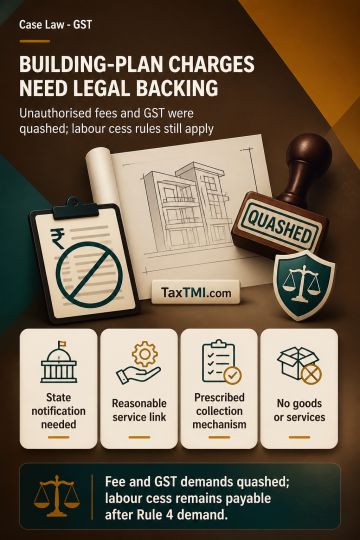
Building-plan sanction charges require statutory authority; unauthorised fees and GST were quashed, while labour cess must follow prescribed collectio...
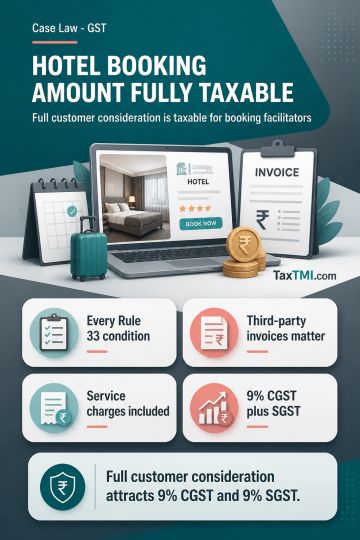
Pure-agent exclusion fails where hotel booking facilitators receive third-party services themselves, making entire customer consideration taxable as r...
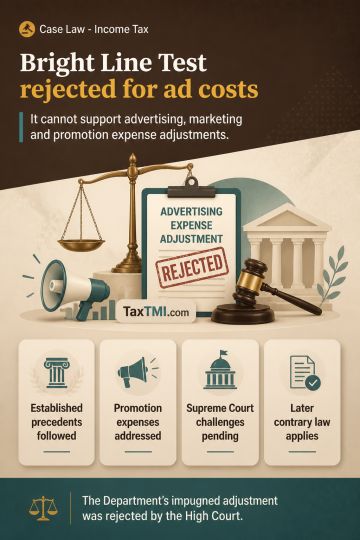
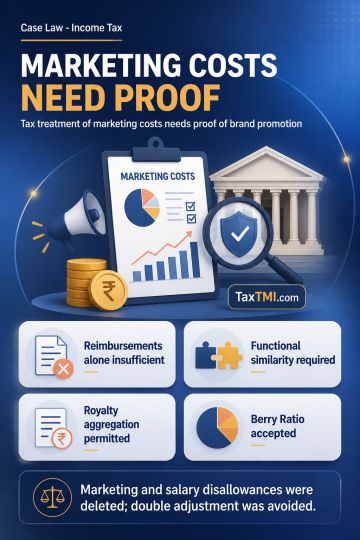
Transfer pricing requires evidence for AMP transactions, functionally reliable comparables, and appropriate aggregation or Berry Ratio benchmarking me...
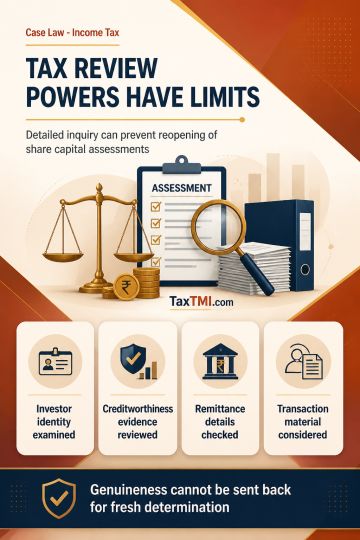
Revisionary jurisdiction cannot reopen share capital assessments where adequate inquiry supports a permissible view and no independent error is establ...
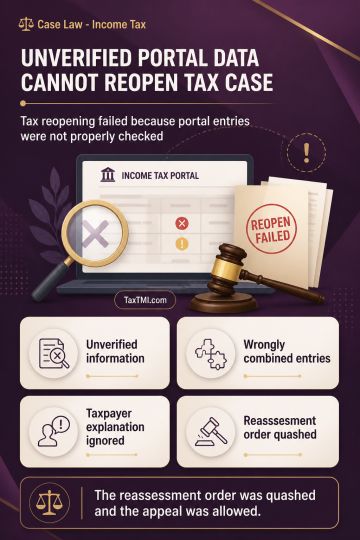
Reassessment jurisdiction fails where unverified portal information is aggregated without examining the taxpayer's explanation or relevance of entries...
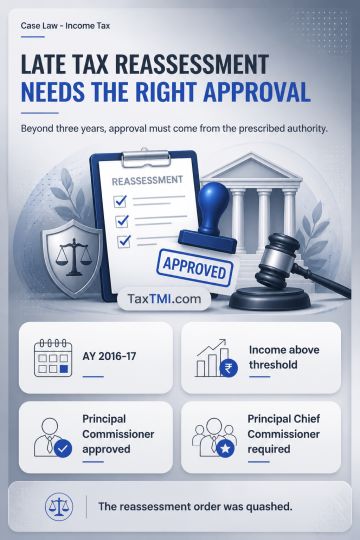
Statutory sanction for delayed reassessment requires approval from the prescribed authority; approval by an inferior authority invalidates jurisdictio...
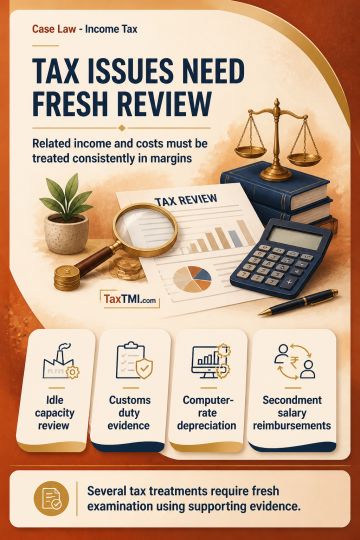
Transfer pricing margin adjustments require matching treatment of non-operating income and related costs, with comparability issues reconsidered on ev...
Page of 4803
Press 'Enter' after typing page number.
181 to 200 of 96047 Results
❮
❯
❯❯
0 / 200
Expand Note
Add to Folder
No Folders have been created
+
Are you sure you want to delete "My most important" ?
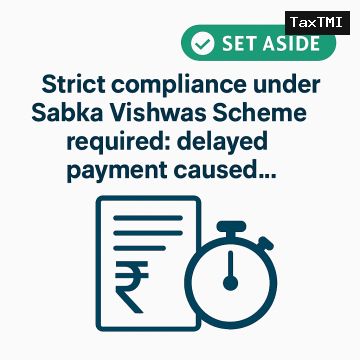
Under the Sabka Vishwas (Legacy Dispute Resolution) Scheme, a declaration lapsed when the declarant failed to pay the amount in Form SVLDRS-3 within the prescribed 30 days; the Tribunal applied the plain meaning of the Scheme and held that no equitable or purposive relief could override the statutory time limit. The belated payment made after the extended last date did not preserve the amnesty benefit, so the service tax demand and interest were sustained. Penalty was, however, set aside because the delay occurred during the COVID period and there was no finding of mala fide intent.
Under the Sabka Vishwas (Legacy Dispute Resolution) Scheme, a declaration lapsed when the declarant failed to pay the amount in Form SVLDRS-3 within the prescribed 30 days; the Tribunal applied the plain meaning of the Scheme and held that no equitable or purposive relief could override the statutory time limit. The belated payment made after the extended last date did not preserve the amnesty benefit, so the service tax demand and interest were sustained. Penalty was, however, set aside because the delay occurred during the COVID period and there was no finding of mala fide intent.
Note: It is a system-generated summary and is for quick reference only.
 TaxTMI
 of 4803





 Join Channel


 TaxTMI