Transaction value cannot be rejected solely on non-statutory valuation guidelines without corroborative evidence supporting reassessment of final cust...
Cross-examination rights and corroborated evidence limit customs penalties for misdeclaration in genuine import transactions involving documented clea...
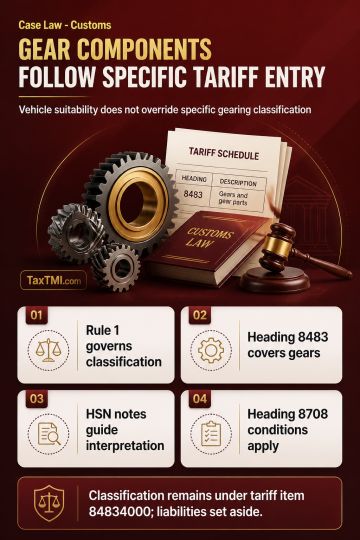
Tariff classification of vehicle gear components follows the specific gearing entry, displacing motor-vehicle parts classification and related liabili...
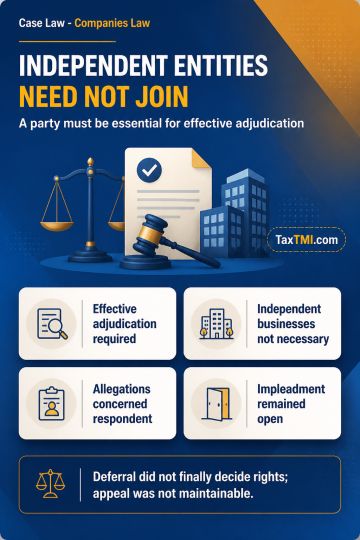
Necessary-party requirements limit impleadment of independent entities, while deferred consideration does not create an appealable adverse determinati...
Food supplement classification requires common parlance and authoritative tests, preventing treatment as proprietary Ayurvedic medicines without suppo...
On allotment-based acquisition of immovable property, the holding period was held to run from the allotment date where the allotment letter created substantive enforceable rights and substantial consideration had already been paid, so the transfer was taxable as long-term capital gain. The Tribunal also treated additional evidence as admitted once it had been sent for remand comments and considered on merits, and found a separate refusal to admit it self-contradictory. For the immovable-property addition, it accepted substantial compliance with the banking-channel condition, held that the stamp duty value as on the allotment date was the relevant benchmark, and restored the matter only for limited factual verification of that valuation.
On allotment-based acquisition of immovable property, the holding period was held to run from the allotment date where the allotment letter created substantive enforceable rights and substantial consideration had already been paid, so the transfer was taxable as long-term capital gain. The Tribunal also treated additional evidence as admitted once it had been sent for remand comments and considered on merits, and found a separate refusal to admit it self-contradictory. For the immovable-property addition, it accepted substantial compliance with the banking-channel condition, held that the stamp duty value as on the allotment date was the relevant benchmark, and restored the matter only for limited factual verification of that valuation.
Note: It is a system-generated summary and is for quick reference only.
 TaxTMI
 of 4801



















 Join Channel



 TaxTMI
