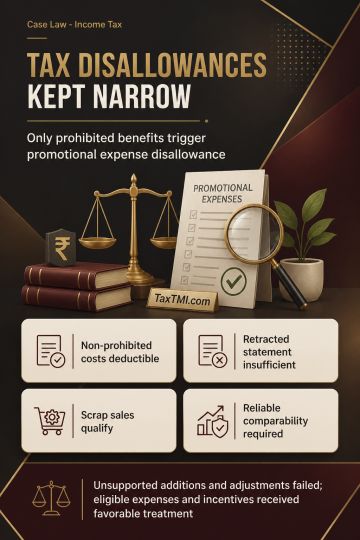
Pharmaceutical promotion and transfer-pricing comparability principles limited disallowances, while uncorroborated search allegations and unsupported ...
Business expenditure substantiation supports scrap credits, statutory payments and expense claims, while depreciation requires proof of actual busines...
Faculty payments were held to fall under a contract for service, not a contract of service, so the recipients were independent professionals rather than employees. Administrative controls such as working hours, attendance requirements, restrictions on outside teaching, and curriculum-based supervision were treated as functional measures and not conclusive proof of an employer-employee relationship. The Tribunal also noted that the faculty were paid professional fees with a variable lecture-based component, received no employment benefits, had no written employment contract, and had reported the receipts as professional income under section 44ADA. TDS under section 194J was therefore correctly deducted, and the assessee could not be treated as in default under sections 201(1) and 201(1A); those orders were quashed.
Faculty payments were held to fall under a contract for service, not a contract of service, so the recipients were independent professionals rather than employees. Administrative controls such as working hours, attendance requirements, restrictions on outside teaching, and curriculum-based supervision were treated as functional measures and not conclusive proof of an employer-employee relationship. The Tribunal also noted that the faculty were paid professional fees with a variable lecture-based component, received no employment benefits, had no written employment contract, and had reported the receipts as professional income under section 44ADA. TDS under section 194J was therefore correctly deducted, and the assessee could not be treated as in default under sections 201(1) and 201(1A); those orders were quashed.
Note: It is a system-generated summary and is for quick reference only.
 TaxTMI
 of 4803






 Join Channel



 TaxTMI