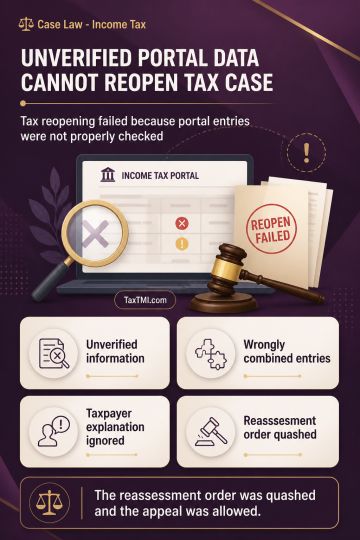
Reassessment jurisdiction fails where unverified portal information is aggregated without examining the taxpayer's explanation or relevance of entries...
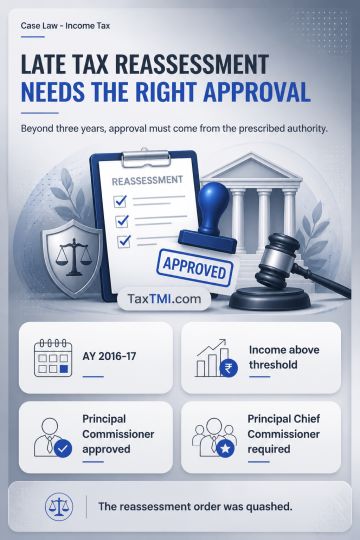
Statutory sanction for delayed reassessment requires approval from the prescribed authority; approval by an inferior authority invalidates jurisdictio...
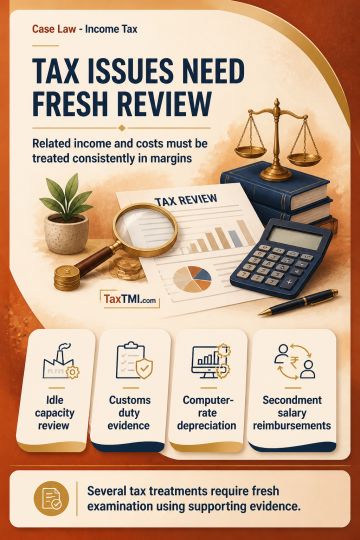
Transfer pricing margin adjustments require matching treatment of non-operating income and related costs, with comparability issues reconsidered on ev...
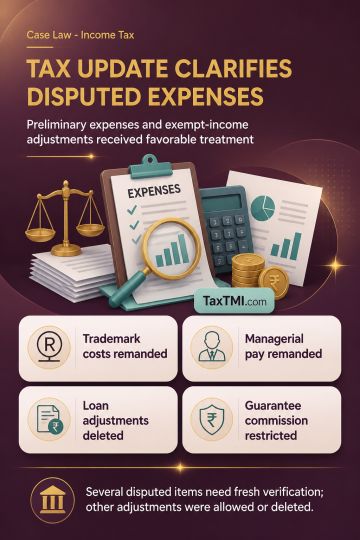
Preliminary-expense amortisation and MAT exempt-income adjustments prevailed, while trademark costs and managerial remuneration require fresh verifica...
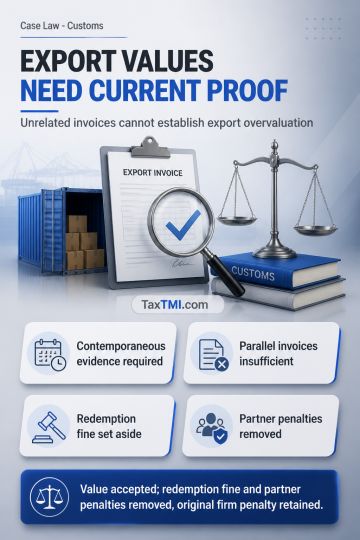
Export valuation requires contemporaneous evidence; unrelated invoices cannot prove overvaluation, and dual penalties on firm and partner are impermis...
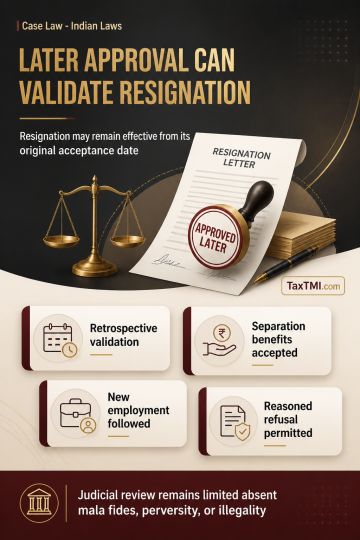
Ratification of resignation acceptance validates separation retrospectively, while withdrawal may be refused through reasoned administrative discretio...
Nature-dependent electricity contracts receive new Ind AS accounting, hedge designation, transition and financial-statement disclosure requirements fr...
Page of 4805
Press 'Enter' after typing page number.
241 to 260 of 96092 Results
❮
❯
❯❯
0 / 200
Expand Note
Add to Folder
No Folders have been created
+
Are you sure you want to delete "My most important" ?
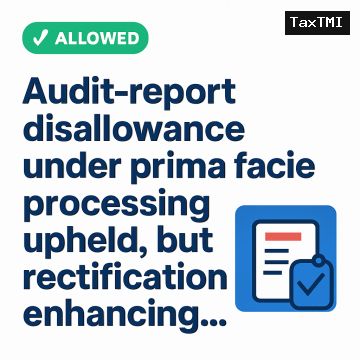
Audit report-based adjustment was permissible in prima facie processing where Clause 21(h) of Form 3CD disclosed a quantified section 14A disallowance not fully reflected in the return, because the amended processing provision allows such a limited adjustment; the jurisdictional challenge therefore failed for A.Y. 2022-23. Rectification that later enhanced liability on the same issue was invalid for A.Y. 2021-22, because section 154 requires notice, a reasonable opportunity of hearing, and proper consideration of the assessee's reply before increasing liability. On merits, the section 14A disallowance for both years was restricted to the amount already offered, since part of the reported figure had already been disallowed in computation and a larger disallowance could not be made without the required recorded dissatisfaction.
Audit report-based adjustment was permissible in prima facie processing where Clause 21(h) of Form 3CD disclosed a quantified section 14A disallowance not fully reflected in the return, because the amended processing provision allows such a limited adjustment; the jurisdictional challenge therefore failed for A.Y. 2022-23. Rectification that later enhanced liability on the same issue was invalid for A.Y. 2021-22, because section 154 requires notice, a reasonable opportunity of hearing, and proper consideration of the assessee's reply before increasing liability. On merits, the section 14A disallowance for both years was restricted to the amount already offered, since part of the reported figure had already been disallowed in computation and a larger disallowance could not be made without the required recorded dissatisfaction.
Note: It is a system-generated summary and is for quick reference only.
 TaxTMI
 of 4805










 Join Channel


 TaxTMI