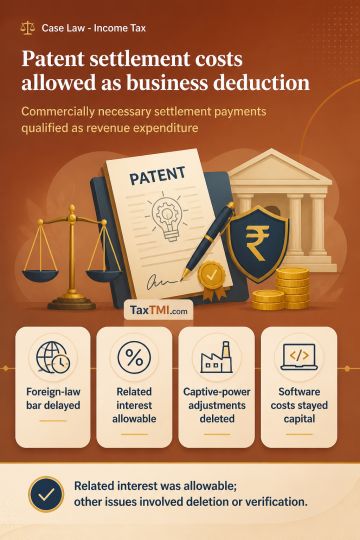
Patent-settlement expenditure treated as commercially expedient revenue outlay, with foreign-law restrictions inapplicable before the prospective amen...
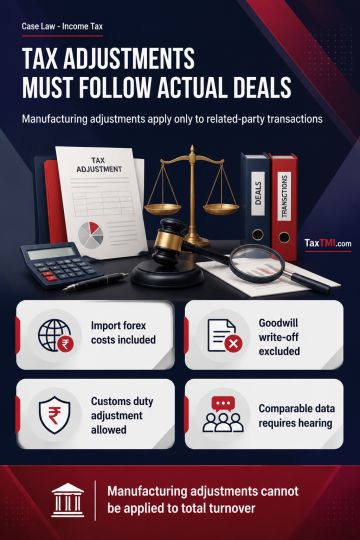
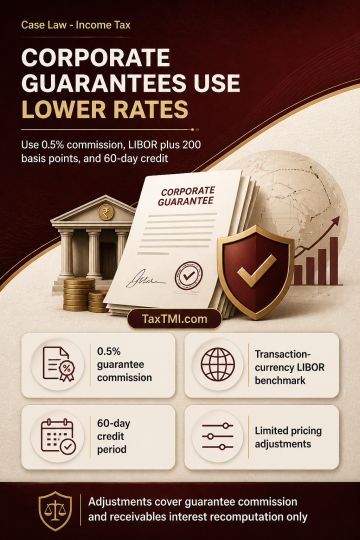
International transaction benchmarking restricts transfer pricing adjustments to associated-enterprise dealings, while functional comparability govern...
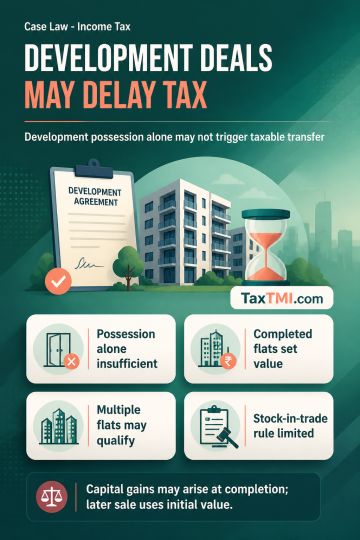
Joint development agreements defer taxable transfer where possession lacks part performance, while completed flats determine consideration and exempti...
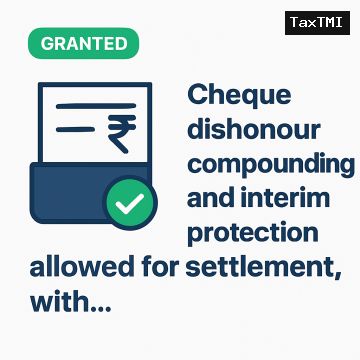
Compounding of a cheque dishonour complaint may be pursued where the dispute is monetary and the accused seeks amicable settlement, with the trial court to act on the basis of the Supreme Court guidelines in Damodar S. Prabhu and later guidance. The accused was permitted to approach the trial court for compounding on deposit of 10% of the cheque amount, and the court below was to pass appropriate orders in accordance with law. No coercive measures were to be taken during the limited period granted for seeking compounding, but if the accused failed to appear, the trial court could proceed against him in accordance with law.
Compounding of a cheque dishonour complaint may be pursued where the dispute is monetary and the accused seeks amicable settlement, with the trial court to act on the basis of the Supreme Court guidelines in Damodar S. Prabhu and later guidance. The accused was permitted to approach the trial court for compounding on deposit of 10% of the cheque amount, and the court below was to pass appropriate orders in accordance with law. No coercive measures were to be taken during the limited period granted for seeking compounding, but if the accused failed to appear, the trial court could proceed against him in accordance with law.
Note: It is a system-generated summary and is for quick reference only.
 TaxTMI
 of 4803





 Join Channel


 TaxTMI
