Business expenditure deduction requires proof of genuine commission payments and commercial allowability; turnover growth alone cannot validate the cl...
Article 8 treaty coverage excluded third-party airline support services, while documented demonetisation cash receipts remained accepted business inco...
Functional comparability under TNMM requires highway contract benchmarks to reflect operation, maintenance and transfer activities, requiring fresh be...
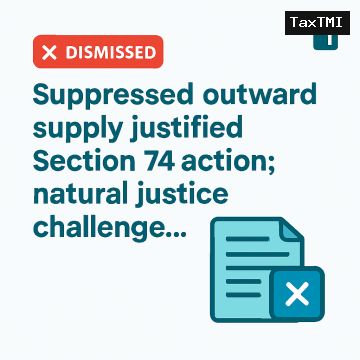
Section 74 GST action was upheld because the show cause notice and assessment were based on a prima facie discrepancy between the seigniorage fee-linked quantity/value and the lower value disclosed in returns, amounting to alleged suppression of outward supply. The HC held that this was sufficient foundational material for invoking the extended period of limitation, and rejected the challenge that there was no basis for Section 74 proceedings. The natural justice objection also failed because intimation notices and show cause notices had been issued and replies were filed, leaving no procedural defect warranting writ interference. The writ petitions were dismissed, with liberty to pursue the statutory appeal.
Section 74 GST action was upheld because the show cause notice and assessment were based on a prima facie discrepancy between the seigniorage fee-linked quantity/value and the lower value disclosed in returns, amounting to alleged suppression of outward supply. The HC held that this was sufficient foundational material for invoking the extended period of limitation, and rejected the challenge that there was no basis for Section 74 proceedings. The natural justice objection also failed because intimation notices and show cause notices had been issued and replies were filed, leaving no procedural defect warranting writ interference. The writ petitions were dismissed, with liberty to pursue the statutory appeal.
Note: It is a system-generated summary and is for quick reference only.
 TaxTMI
 of 4805
















 Join Channel


 TaxTMI