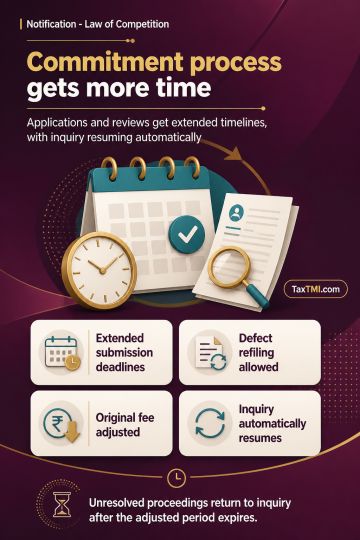
Commitment proceedings gain extended timelines, structured defect refiling, and automatic resumption of inquiry after the adjusted completion period e...
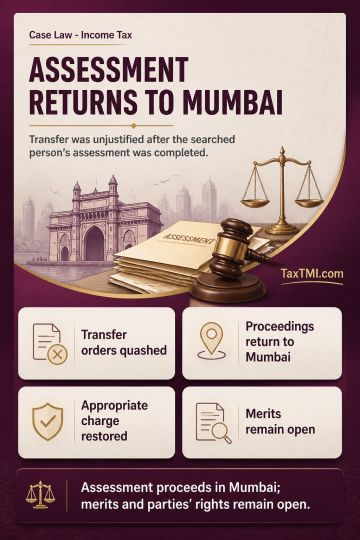
Centralised assessment transfer becomes unwarranted once the searched person's assessment is complete, requiring restoration to the appropriate charge...
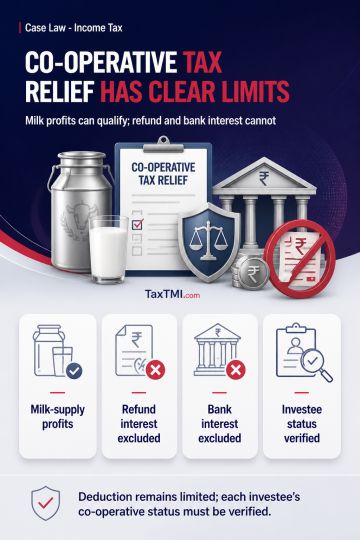
Co-operative deduction eligibility excludes refund and commercial-bank interest, while qualifying co-operative investments require entity-wise verific...
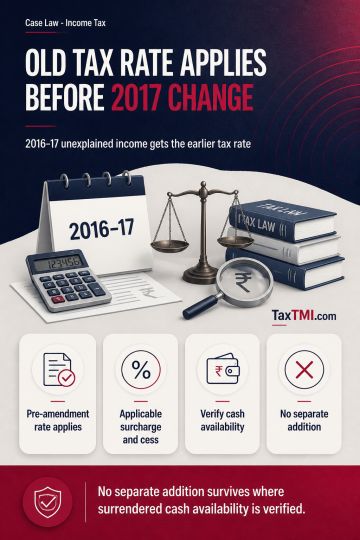
Enhanced tax rate on surrendered unexplained income applies prospectively, while cash-deposit telescoping requires verification of available surrender...
Page of 4805
Press 'Enter' after typing page number.
101 to 120 of 96100 Results
❮
❯
❯❯
0 / 200
Expand Note
Add to Folder
No Folders have been created
+
Are you sure you want to delete "My most important" ?
Mechanical approval under section 153D vitiates search...
Mechanical approval under search assessment law vitiates assessments when sanction lacks application of mind; retrospective curative provision cannot validate it.
Contents
Summary
Note
Bookmark
Share
✓ Copied successfully !
Print
Print Options
For full text, please login
Login to TaxTMI
Verification Pending
The Email Id has not been verified. Click on the link we have sent on
Mechanical approval under section 153D vitiates search assessments where the sanction order shows no examination of the assessment records, issues involved, material relied upon, or reasons for approval across multiple years. The Tribunal treated this as a case of absence of application of mind, not a mere inadequacy of reasons, and held the assessments framed on that basis unsustainable. Section 292BC did not cure the defect because, though made retrospective from 01.04.2021, it could not validate approvals granted earlier. The challenge to the section 153D approval was allowed and the assessments were quashed.
Mechanical approval under section 153D vitiates search assessments where the sanction order shows no examination of the assessment records, issues involved, material relied upon, or reasons for approval across multiple years. The Tribunal treated this as a case of absence of application of mind, not a mere inadequacy of reasons, and held the assessments framed on that basis unsustainable. Section 292BC did not cure the defect because, though made retrospective from 01.04.2021, it could not validate approvals granted earlier. The challenge to the section 153D approval was allowed and the assessments were quashed.
Note: It is a system-generated summary and is for quick reference only.
 TaxTMI
 of 4805








 Join Channel



 TaxTMI