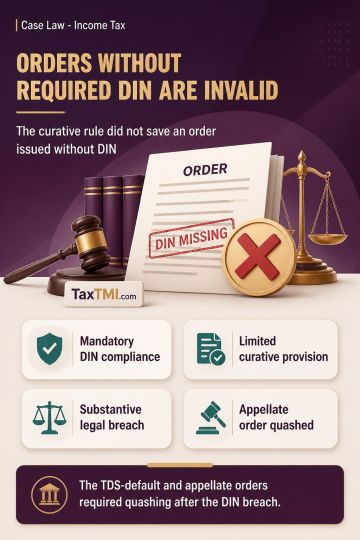
Document Identification Number compliance renders TDS-default orders invalid where mandatory DIN requirements are breached and curative provision does...
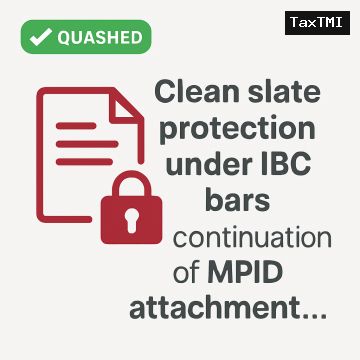
On approval of a resolution plan, Section 32A of the IBC protects the corporate debtor on a clean slate basis, so attachment of its property for prior offences cannot continue and the impugned MPID notification was liable to be quashed to that extent. The HC also held that vesting under the MPID Act remains inchoate until the Designated Court makes the attachment absolute; absent such an order, the property had not finally vested in the Competent Authority and remained available to the resolution plan. The writ was maintainable because the issue was a pure question of law, despite the alternative forum.
On approval of a resolution plan, Section 32A of the IBC protects the corporate debtor on a clean slate basis, so attachment of its property for prior offences cannot continue and the impugned MPID notification was liable to be quashed to that extent. The HC also held that vesting under the MPID Act remains inchoate until the Designated Court makes the attachment absolute; absent such an order, the property had not finally vested in the Competent Authority and remained available to the resolution plan. The writ was maintainable because the issue was a pure question of law, despite the alternative forum.
Note: It is a system-generated summary and is for quick reference only.
 TaxTMI
  TaxTMI
 of 4918