Fair-rent assessment requires consideration of lease terms, valuation principles and prevailing market rent; the certificate was quashed for fresh rev...
Document Identification Number compliance is satisfied when electronically communicated orders are promptly authenticated through a correctly identifi...
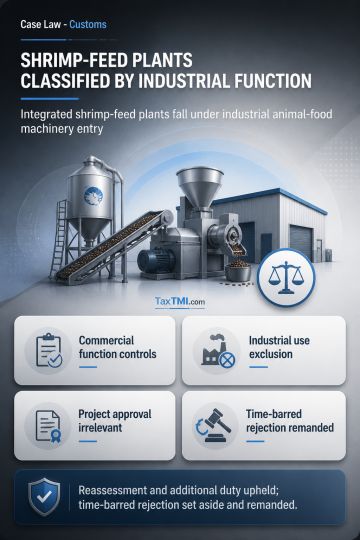
Industrial shrimp-feed machinery classification follows its commercial function, placing integrated production plants under the specific industrial fo...
The statutory right of appeal is order-specific: an assessee may challenge only the order that creates a grievance, and an intimation under section 143(1) and an assessment under section 143(3) operate independently. Where the later assessment merely accepts the income already determined under section 143(1) and makes no fresh addition or other adverse variation, no grievance arises from that assessment order and no appeal lies against it. The Tribunal rejected the doctrine of merger, holding that a challenge to adjustments made under section 143(1) must be taken against that order itself, not indirectly through an appeal against the later assessment. The dismissal of the appeal was therefore upheld.
The statutory right of appeal is order-specific: an assessee may challenge only the order that creates a grievance, and an intimation under section 143(1) and an assessment under section 143(3) operate independently. Where the later assessment merely accepts the income already determined under section 143(1) and makes no fresh addition or other adverse variation, no grievance arises from that assessment order and no appeal lies against it. The Tribunal rejected the doctrine of merger, holding that a challenge to adjustments made under section 143(1) must be taken against that order itself, not indirectly through an appeal against the later assessment. The dismissal of the appeal was therefore upheld.
Note: It is a system-generated summary and is for quick reference only.
 TaxTMI
 of 4800











 Join Channel



 TaxTMI
