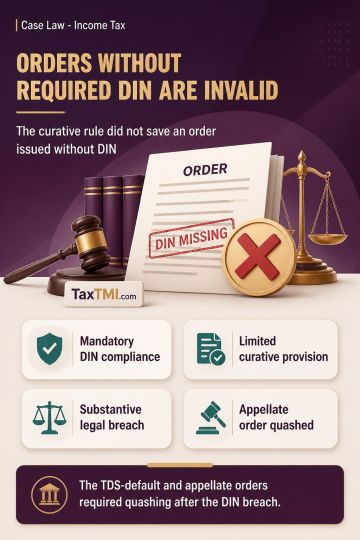
Document Identification Number compliance renders TDS-default orders invalid where mandatory DIN requirements are breached and curative provision does...
A binding advance pricing agreement covering the relevant intra-group second line support services prevented disallowance of the related expenditure on business expediency grounds. The Tribunal held that, once a transaction falls within an APA, it binds both the Department and the assessee because the APA process already examines functions, assets, risks, benefit, and cost allocation; that itself establishes business purpose. The Assessing Officer could not ignore the APA and disallow the expenditure under section 37(1), particularly where no reasons were recorded for the disallowance and similar expenditure had been accepted in earlier years. The disallowance was deleted and the assessee's claim was allowed.
A binding advance pricing agreement covering the relevant intra-group second line support services prevented disallowance of the related expenditure on business expediency grounds. The Tribunal held that, once a transaction falls within an APA, it binds both the Department and the assessee because the APA process already examines functions, assets, risks, benefit, and cost allocation; that itself establishes business purpose. The Assessing Officer could not ignore the APA and disallow the expenditure under section 37(1), particularly where no reasons were recorded for the disallowance and similar expenditure had been accepted in earlier years. The disallowance was deleted and the assessee's claim was allowed.
Note: It is a system-generated summary and is for quick reference only.
 TaxTMI
  TaxTMI
 of 4918