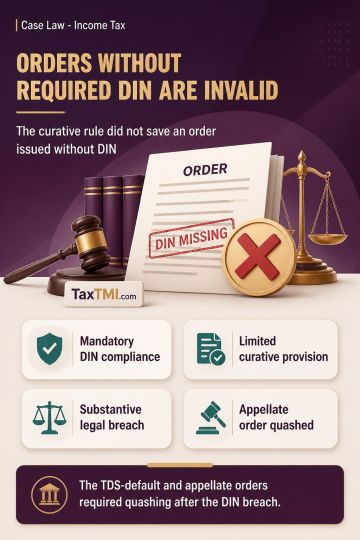
Document Identification Number compliance renders TDS-default orders invalid where mandatory DIN requirements are breached and curative provision does...
Sampling of imported coal had to comply with IS 436, and a test report based on non-compliant sampling could not be used to deny customs exemption; the Tribunal applied Tata Chemicals and held that the prescribed method must be followed, with no estoppel against law. The Revenue's objections that the importer had earlier accepted similar testing and that the samples were taken in the presence of its agent were rejected. Retesting was also justified because the load port report and the departmental laboratory report conflicted, and the departmental result was communicated only after substantial delay. The Tribunal dismissed the Revenue's appeal and sustained the notification benefit.
Sampling of imported coal had to comply with IS 436, and a test report based on non-compliant sampling could not be used to deny customs exemption; the Tribunal applied Tata Chemicals and held that the prescribed method must be followed, with no estoppel against law. The Revenue's objections that the importer had earlier accepted similar testing and that the samples were taken in the presence of its agent were rejected. Retesting was also justified because the load port report and the departmental laboratory report conflicted, and the departmental result was communicated only after substantial delay. The Tribunal dismissed the Revenue's appeal and sustained the notification benefit.
Note: It is a system-generated summary and is for quick reference only.
 TaxTMI
  TaxTMI
 of 4918