Development agreements require legal possession or effective enjoyment for capital gains transfer; permissive possession and deferred consideration de...
Prolonged sterilisation of development rights supports capital-gains treatment, while business-income disallowances cannot govern capital-gains comput...
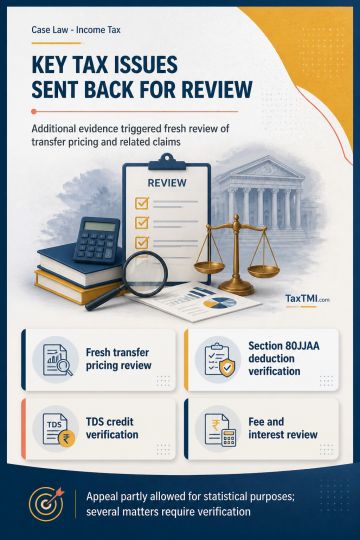
Additional evidence in transfer pricing dispute leads to fresh examination, while tax deductions, TDS credit, fee and refund interest require verifica...
Category II AIF pass-through taxation preserves non-business income character; investment receipts cannot be reclassified without applying recognised ...
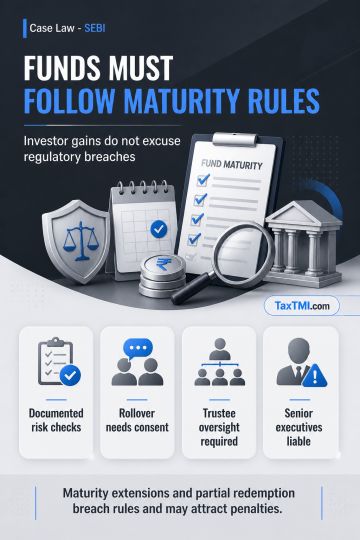
Mutual fund maturity rules require proper rollover, redemption, disclosure, and due diligence; investor gains cannot excuse regulatory breaches or pen...
CKD motherboard kits made up of discrete electronic and electromechanical components are not classifiable as motherboards under tariff item 8473 30 20 when, at import, they lack the essential character of a finished motherboard and require substantial post-import operations before a functional unit emerges. Rule 2(a) applies only to articles presented unassembled or disassembled that already possess the essential character of the finished article; separately identifiable components that retain their own tariff identity remain classified under their respective headings. Classification therefore falls to Rule 1, read with the relevant Chapter and Section notes, based on the individual goods imported.
CKD motherboard kits made up of discrete electronic and electromechanical components are not classifiable as motherboards under tariff item 8473 30 20 when, at import, they lack the essential character of a finished motherboard and require substantial post-import operations before a functional unit emerges. Rule 2(a) applies only to articles presented unassembled or disassembled that already possess the essential character of the finished article; separately identifiable components that retain their own tariff identity remain classified under their respective headings. Classification therefore falls to Rule 1, read with the relevant Chapter and Section notes, based on the individual goods imported.
Note: It is a system-generated summary and is for quick reference only.
 TaxTMI
 of 4798













 Join Channel



 TaxTMI
