AMP expenditure for own business is not an international transaction without an associated-enterprise arrangement, eliminating transfer pricing adjust...
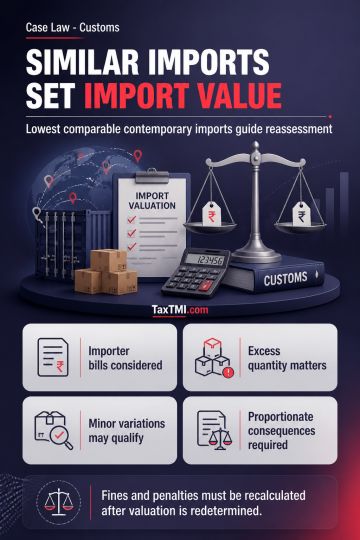
Customs valuation must use comparable contemporary imports, while confiscation fines and penalties require proportionate recalculation on reassessed v...
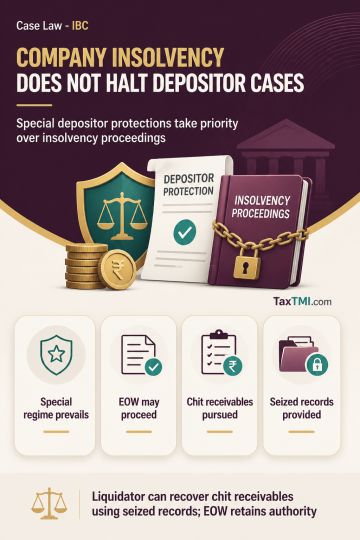
Depositor-protection proceedings prevail over corporate insolvency, while liquidators may recover chit receivables using copies of seized company reco...
Intermediary service classification fails where overseas admission facilitation is supplied independently, preserving export treatment and small-provi...
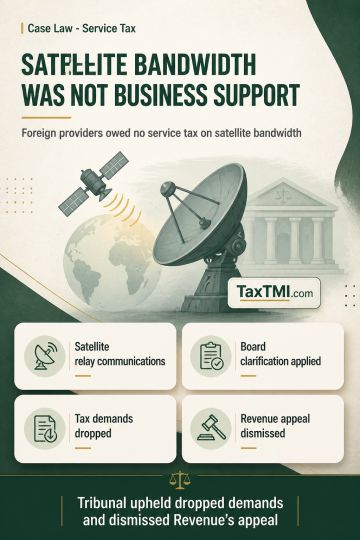
Satellite transponder bandwidth is telecommunication, not Business Support Service; foreign non-telegraph providers triggered no service tax liability...
CKD motherboard kits made up of discrete electronic and electromechanical components are not classifiable as motherboards under tariff item 8473 30 20 when, at import, they lack the essential character of a finished motherboard and require substantial post-import operations before a functional unit emerges. Rule 2(a) applies only to articles presented unassembled or disassembled that already possess the essential character of the finished article; separately identifiable components that retain their own tariff identity remain classified under their respective headings. Classification therefore falls to Rule 1, read with the relevant Chapter and Section notes, based on the individual goods imported.
CKD motherboard kits made up of discrete electronic and electromechanical components are not classifiable as motherboards under tariff item 8473 30 20 when, at import, they lack the essential character of a finished motherboard and require substantial post-import operations before a functional unit emerges. Rule 2(a) applies only to articles presented unassembled or disassembled that already possess the essential character of the finished article; separately identifiable components that retain their own tariff identity remain classified under their respective headings. Classification therefore falls to Rule 1, read with the relevant Chapter and Section notes, based on the individual goods imported.
Note: It is a system-generated summary and is for quick reference only.
 TaxTMI
 of 4805











 Join Channel



 TaxTMI
