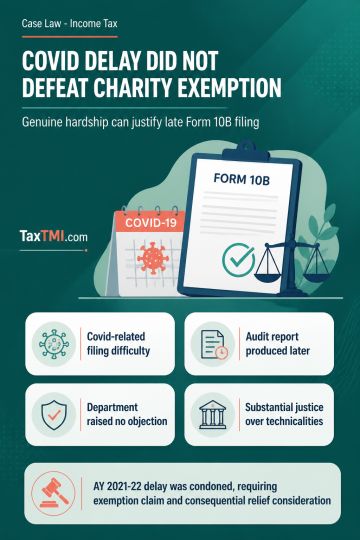
Belated Form 10B filing during Covid-19 cannot defeat charitable exemption where genuine hardship warrants condonation and substantial justice prevail...
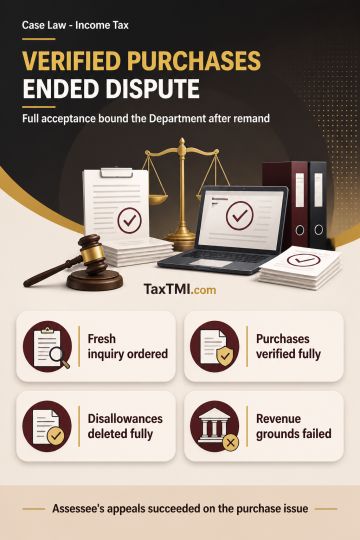
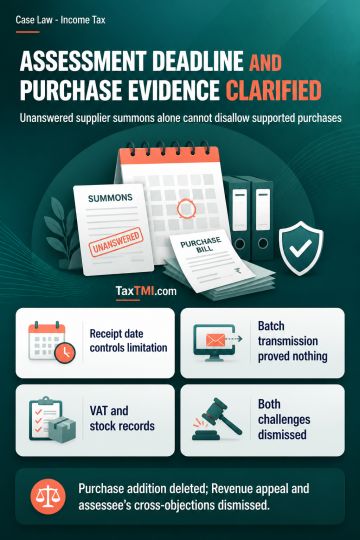
Limitation for consequential assessments runs from prescribed authority receipt, while verified purchases cannot be disallowed merely for unanswered s...
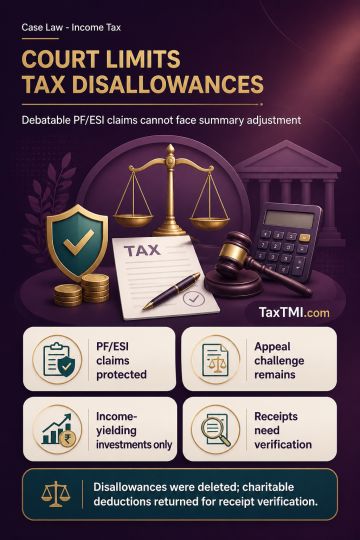
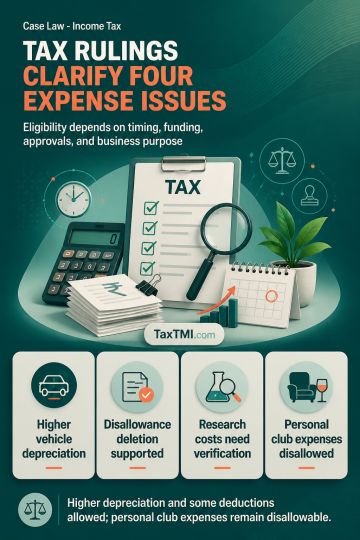
Higher depreciation for qualifying commercial vehicles, exempt-income disallowance, research deduction verification, and club-expense treatment clarif...
Charitable registration renewal cannot become an assessment of receipts, profitability or annual exemption compliance, requiring renewal and donation ...
Page of 4805
Press 'Enter' after typing page number.
61 to 80 of 96100 Results
❮
❯
❯❯
0 / 200
Expand Note
Add to Folder
No Folders have been created
+
Are you sure you want to delete "My most important" ?
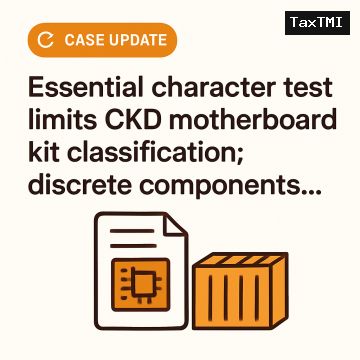
CKD motherboard kits made up of discrete electronic and electromechanical components are not classifiable as motherboards under tariff item 8473 30 20 when, at import, they lack the essential character of a finished motherboard and require substantial post-import operations before a functional unit emerges. Rule 2(a) applies only to articles presented unassembled or disassembled that already possess the essential character of the finished article; separately identifiable components that retain their own tariff identity remain classified under their respective headings. Classification therefore falls to Rule 1, read with the relevant Chapter and Section notes, based on the individual goods imported.
CKD motherboard kits made up of discrete electronic and electromechanical components are not classifiable as motherboards under tariff item 8473 30 20 when, at import, they lack the essential character of a finished motherboard and require substantial post-import operations before a functional unit emerges. Rule 2(a) applies only to articles presented unassembled or disassembled that already possess the essential character of the finished article; separately identifiable components that retain their own tariff identity remain classified under their respective headings. Classification therefore falls to Rule 1, read with the relevant Chapter and Section notes, based on the individual goods imported.
Note: It is a system-generated summary and is for quick reference only.
 TaxTMI
 of 4805







 Join Channel


 TaxTMI