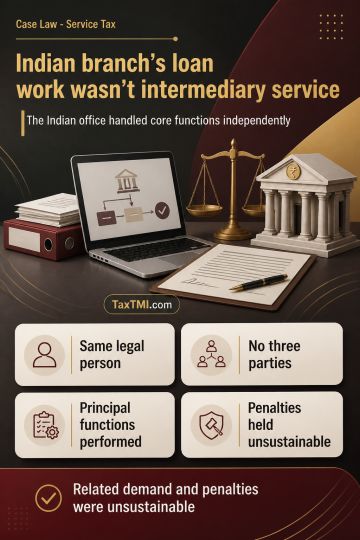
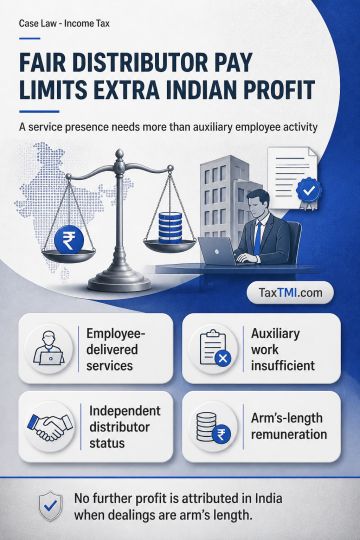
Service permanent establishment requires non-auxiliary services, while arm's-length distributor remuneration precludes further profit attribution in I...
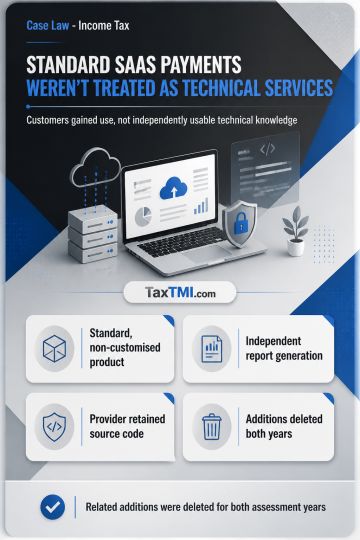
Make-available condition excludes standard SaaS subscription receipts where customers receive no independently usable technical knowledge after subscr...
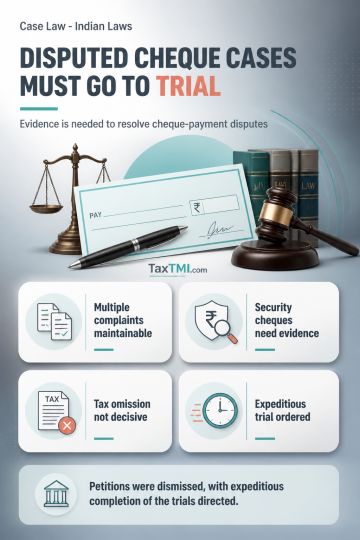
In cheque dishonour proceedings, once issuance of the cheque and the signature are admitted or proved, a reverse onus arises and the law presumes that the cheque was issued towards a legally enforceable debt or liability; the accused must rebut that presumption by a probable defence supported by cogent material, and a bare denial or vague explanation is insufficient. Dishonour on stop-payment instructions can still attract penal consequences where the cheque was presented within validity, returned unpaid, notice was issued in time, and payment was not made. On that basis, the acquittal was set aside and the complaint cases were remanded for fresh adjudication.
In cheque dishonour proceedings, once issuance of the cheque and the signature are admitted or proved, a reverse onus arises and the law presumes that the cheque was issued towards a legally enforceable debt or liability; the accused must rebut that presumption by a probable defence supported by cogent material, and a bare denial or vague explanation is insufficient. Dishonour on stop-payment instructions can still attract penal consequences where the cheque was presented within validity, returned unpaid, notice was issued in time, and payment was not made. On that basis, the acquittal was set aside and the complaint cases were remanded for fresh adjudication.
Note: It is a system-generated summary and is for quick reference only.
 TaxTMI
 of 4805



 Join Channel


 TaxTMI
