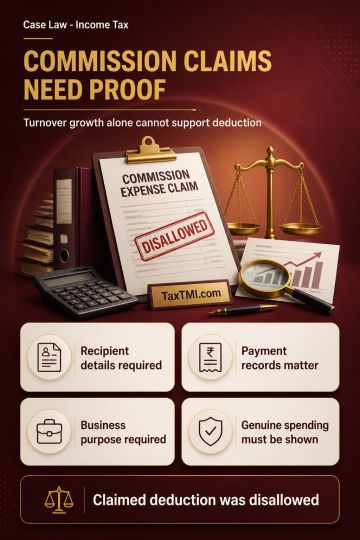
Business expenditure deduction requires proof of genuine commission payments and commercial allowability; turnover growth alone cannot validate the cl...
Article 8 treaty coverage excluded third-party airline support services, while documented demonetisation cash receipts remained accepted business inco...
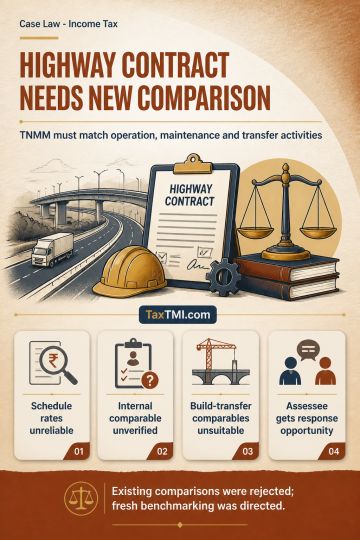
Functional comparability under TNMM requires highway contract benchmarks to reflect operation, maintenance and transfer activities, requiring fresh be...
In cheque dishonour proceedings, once issuance of the cheque and the signature are admitted or proved, a reverse onus arises and the law presumes that the cheque was issued towards a legally enforceable debt or liability; the accused must rebut that presumption by a probable defence supported by cogent material, and a bare denial or vague explanation is insufficient. Dishonour on stop-payment instructions can still attract penal consequences where the cheque was presented within validity, returned unpaid, notice was issued in time, and payment was not made. On that basis, the acquittal was set aside and the complaint cases were remanded for fresh adjudication.
In cheque dishonour proceedings, once issuance of the cheque and the signature are admitted or proved, a reverse onus arises and the law presumes that the cheque was issued towards a legally enforceable debt or liability; the accused must rebut that presumption by a probable defence supported by cogent material, and a bare denial or vague explanation is insufficient. Dishonour on stop-payment instructions can still attract penal consequences where the cheque was presented within validity, returned unpaid, notice was issued in time, and payment was not made. On that basis, the acquittal was set aside and the complaint cases were remanded for fresh adjudication.
Note: It is a system-generated summary and is for quick reference only.
 TaxTMI
 of 4805









 Join Channel


 TaxTMI