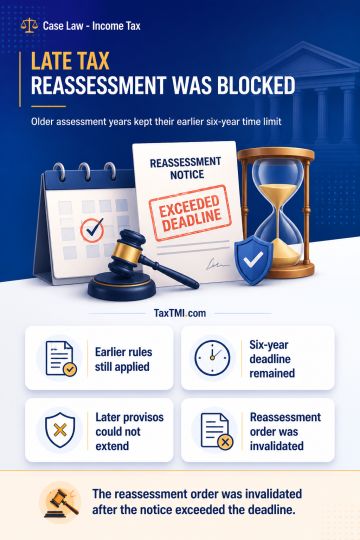
Pre-amendment reassessment limitation bars late notices under the preserved regime, invalidating consequential reassessment for affected earlier asses...
Cash-sales explanations for bank deposits require documentary reconciliation; reassessment notice survived where effective response time was available...
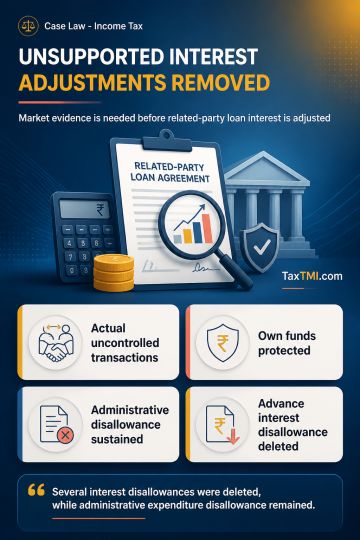
Functional comparability in transfer pricing prevents ad hoc arm's length adjustments where functions, assets, risks and reliable comparables are unes...
A pure legal challenge to a reassessment notice was admitted in cross objection because it went to the root of jurisdiction and had already been raised below. On merits, the ITAT held that a reopening notice issued beyond six years from the end of the relevant assessment year was time-barred. Applying the jurisdictional High Court view, it ruled that the extended reassessment limitation under the amended law operates prospectively and does not revive cases where the old six-year period had already expired. The notice was quashed, the reassessment was invalidated, the assessee's cross objection was allowed, and the Revenue's appeal on merits failed.
A pure legal challenge to a reassessment notice was admitted in cross objection because it went to the root of jurisdiction and had already been raised below. On merits, the ITAT held that a reopening notice issued beyond six years from the end of the relevant assessment year was time-barred. Applying the jurisdictional High Court view, it ruled that the extended reassessment limitation under the amended law operates prospectively and does not revive cases where the old six-year period had already expired. The notice was quashed, the reassessment was invalidated, the assessee's cross objection was allowed, and the Revenue's appeal on merits failed.
Note: It is a system-generated summary and is for quick reference only.
 TaxTMI
  TaxTMI
 of 4918